






Fitted Wardrobe Lighting: What to Plan Before You Order
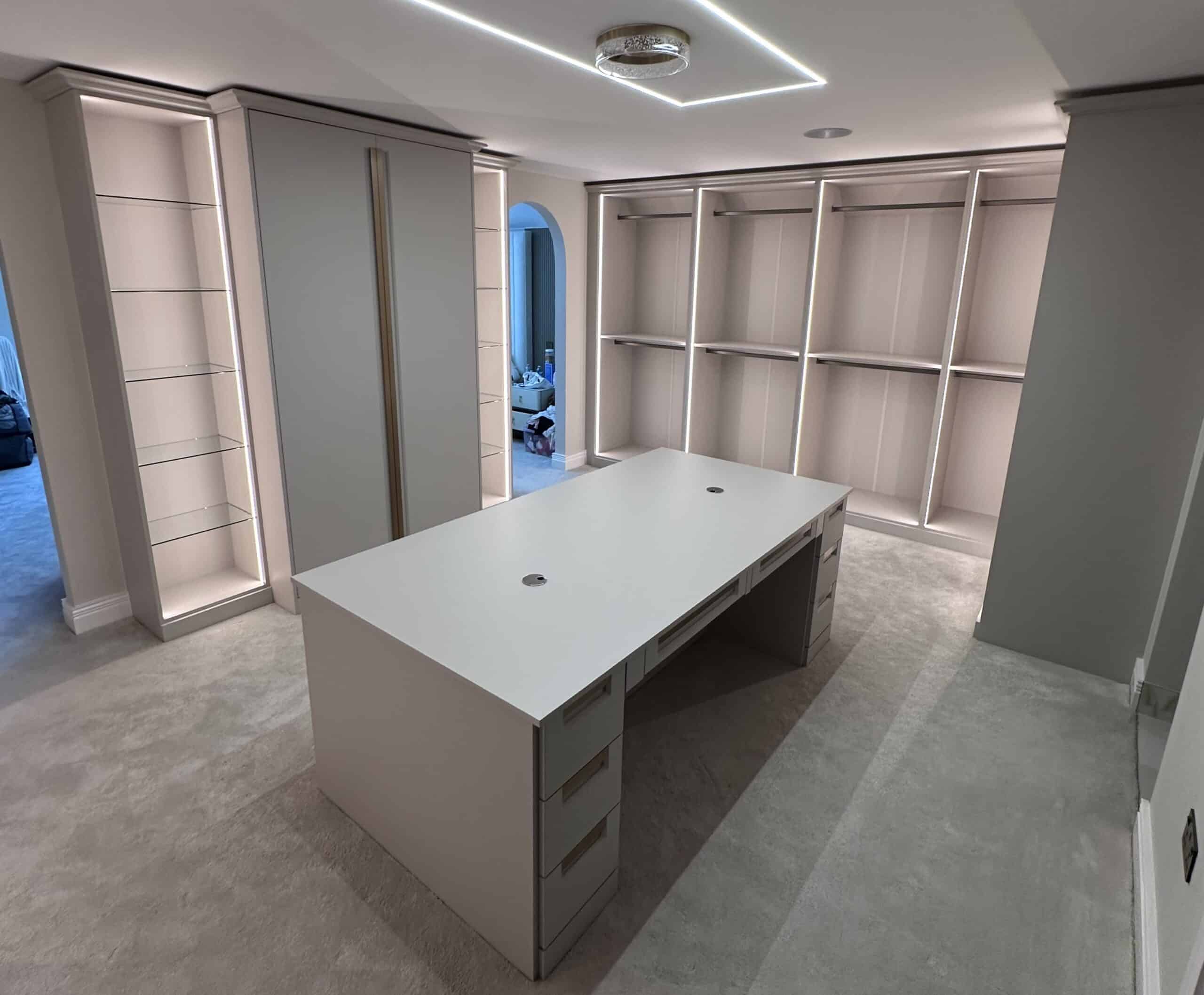
Fitted wardrobe lighting is most useful when it helps you see what you are choosing. A light that looks attractive in an empty cabinet may be less effective once rails are full, shelves contain folded clothes and someone is standing in front of the doors. Planning it alongside the interior gives you a better chance of getting light where you need it. If you’re choosing a new fitted wardrobe, discuss lighting before the design is finalised. The available options, their position and the way they are controlled should be considered with the storage layout, rather than treated as a decorative addition at the end.
Decide what the light needs to help you do
Start with a few everyday tasks. Do you struggle to distinguish clothes hanging at the back? Are lower shelves difficult to see? Would you like a clearer view of accessories without switching on every light in the bedroom? Different tasks may need different treatment. Illuminating a rail is not the same as lighting a dressing mirror or highlighting a display shelf. Explain the problem you want to solve before discussing particular fittings.
At My Fitted Bedroom, integrated lighting can be considered as part of a bespoke wardrobe design, depending on the chosen arrangement. Ask which options are suitable for the furniture being proposed for your room.
Look at the fitted wardrobe when it’s full
Clothes and shelves can interrupt the path of light. A high-level light may illuminate the top of a hanging section, whilst leaving parts of the contents below less visible. Deeply stacked shelves can create their own shaded areas.
Ask the fitted wardrobe designer to explain how the proposed lighting relates to the rails, drawers and shelves. If possible, look at an example with belongings in place, rather than judging an empty display. Think about your position too. You should be able to stand naturally in front of the wardrobe and see what you need without blocking the most useful light. The effect depends on the placement and the interior, not simply on how many lights are added.
Separate fitted wardrobe lighting from bedroom lighting
The bedroom’s main lighting needs to serve the room as a whole. Lighting inside a fitted wardrobe has a more specific task and should be assessed on that basis. You may want to use it independently whilst choosing clothes or combine it with the room lighting when putting things away. Explain when you normally get dressed and whether another person may still be using the bedroom at the time.
For a walk-in wardrobe or dressing room, consider the whole space as well as the cabinetry. You need to move around comfortably, see the storage and use any mirror or dressing table. One decorative lighting feature may not meet all those needs.
Check how it will switch on and off
Controls should be easy to understand and use. Ask which switching options work with the proposed furniture and lighting system, and how they behave when the wardrobe doors are opened or closed. If a sensor is suggested, ask what activates it and when the light turns off. If the system uses a separate switch, establish where it will be and whether it is convenient from the position in which you use the wardrobe. These are small details, but they affect whether the lighting becomes useful every day. Avoid choosing a control method purely because it sounds sophisticated; make sure it fits your routine.
Be bold, be beautiful. Browse our best sellers.
Plan power and future access
Ask how the lighting will be powered, where its components will sit and how they can be accessed for maintenance. Cables and other parts should be considered within the design, rather than left for an improvised solution during fitting. Confirm whether any electrical preparation is required and who is responsible for arranging it. If a qualified electrician needs to be involved, coordinate that work with the furniture team before installation. Also ask what happens if a light or component needs replacing later. Understanding the proposed access and care requirements is part of choosing a system you can live with comfortably.
Bring lighting into the first design conversation
Make a note of the places where your current storage is difficult to see and the times you usually use it. Book a free home design visit with My Fitted Bedroom to plan lighting, storage and access as parts of the same fitted wardrobe design.