






10 Modern Fitted Wardrobe Ideas for 1930s Homes
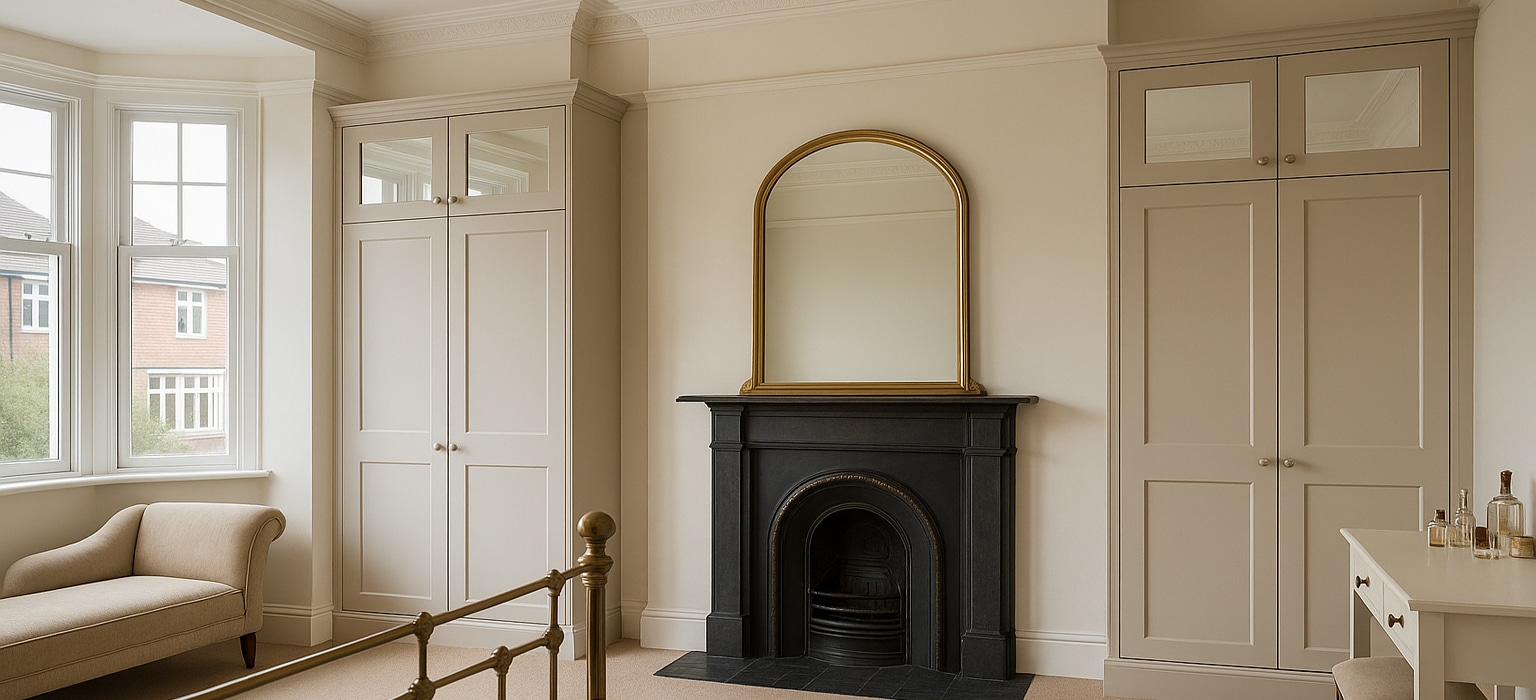
Discover 10 modern fitted wardrobe ideas for 1930s homes. From high ceilings to uneven alcoves, our bespoke designs maximise space while respecting your home’s period style.
Modern Fitted Wardrobes for 1930s Homes – 10 Stylish Ideas
If you own a 1930s home, you’ll know its charm comes with quirks: high ceilings, chimney breasts with uneven alcoves, and beautiful period details like picture rails and bay windows. While these features give character, they make buying standard wardrobes tricky. That’s where modern fitted wardrobes come in — made to your exact measurements so every inch of space is used.
Here are 10 fitted wardrobe ideas designed especially for 1930s bedrooms.
1. Perfectly Fitted for Non-Symmetrical Alcoves
Bespoke wardrobes can be built to match each alcove’s unique size, giving you seamless symmetry even when the room isn’t.
2. Use the Height
1930s homes often have tall ceilings — build wardrobes right up to the top with extra storage in top-box cupboards.
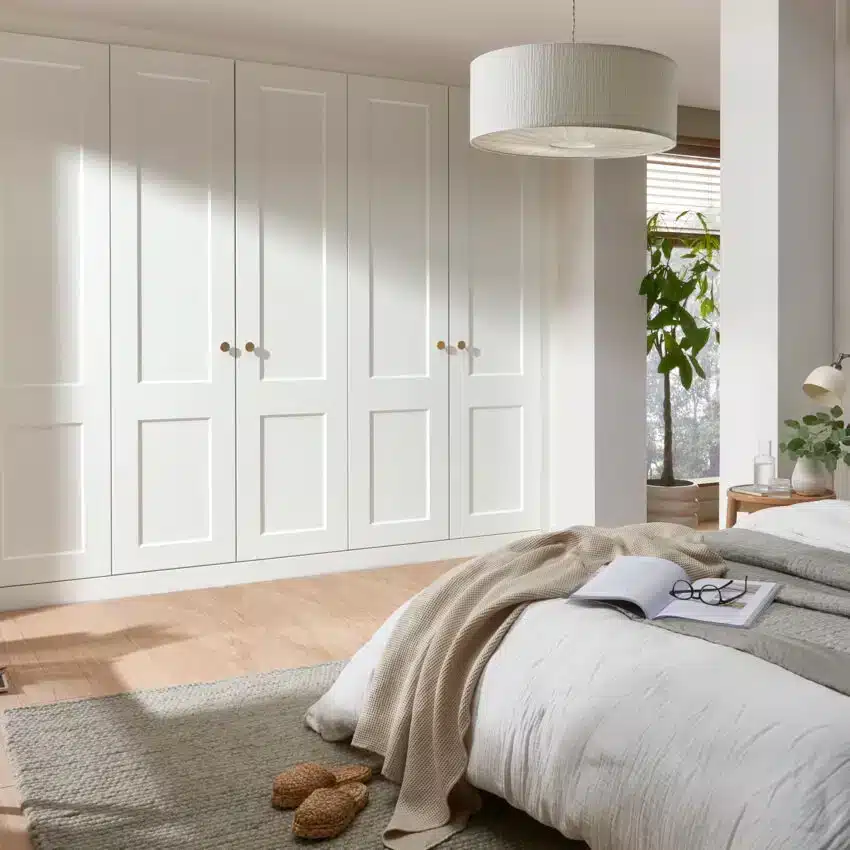
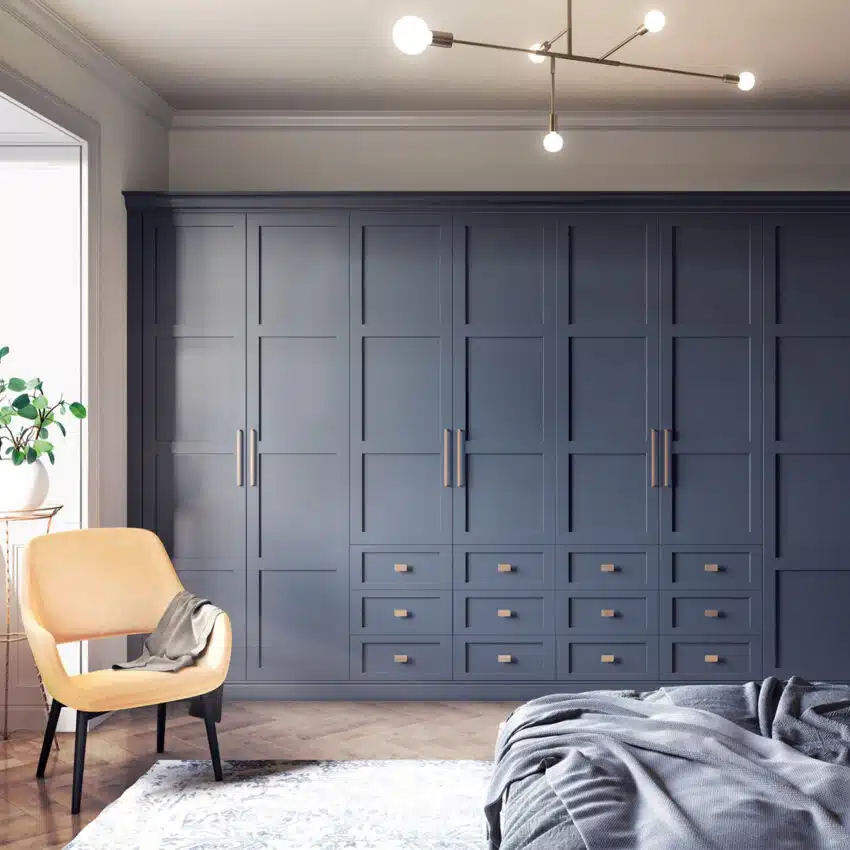
3. Shaker Style That Suits the Era
Shaker doors in white, cashmere or grey suit 1930s period charm while keeping a fresh, modern feel.
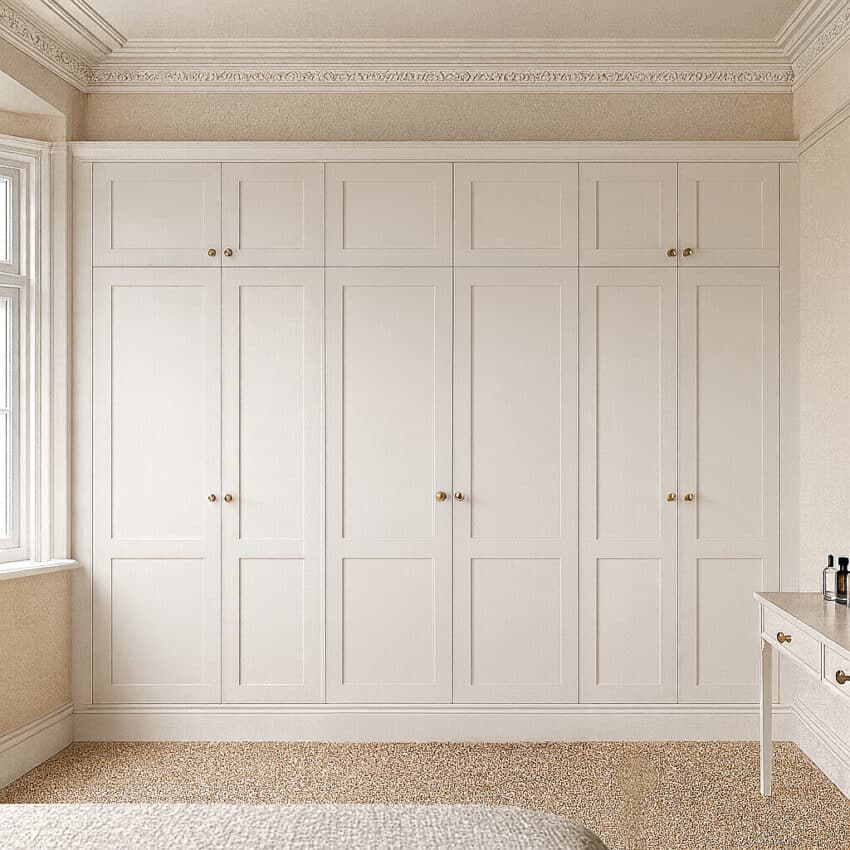
4. Work Around Picture Rails and Coving
Rather than removing period features, wardrobes can be scribed around them or designed to sit just below.
5. Add Mirrored Doors
They brighten darker rooms and make the space feel bigger — perfect for north-facing bays.
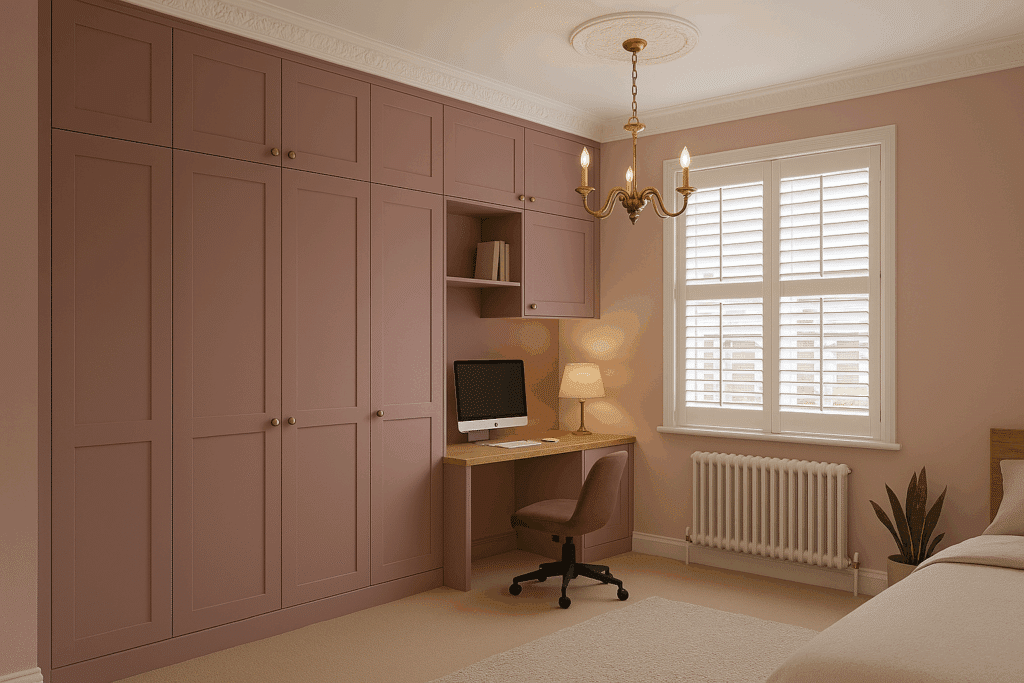
6. Build in Dressing Tables or Desks
Integrate a desk, vanity, or reading nook between fitted wardrobes for clever use of alcove space.
7. Plan Your Interiors
Pull-down rails, deep drawers, shoe racks and lighting make every part of your wardrobe practical and accessible.
8. Complement Bay Windows
Place wardrobes on the opposite wall, with a fitted window seat or dressing area to balance the room.
9. Two-Tone Finishes
Mix white frames with oak doors for a modern twist that still nods to original wood tones.
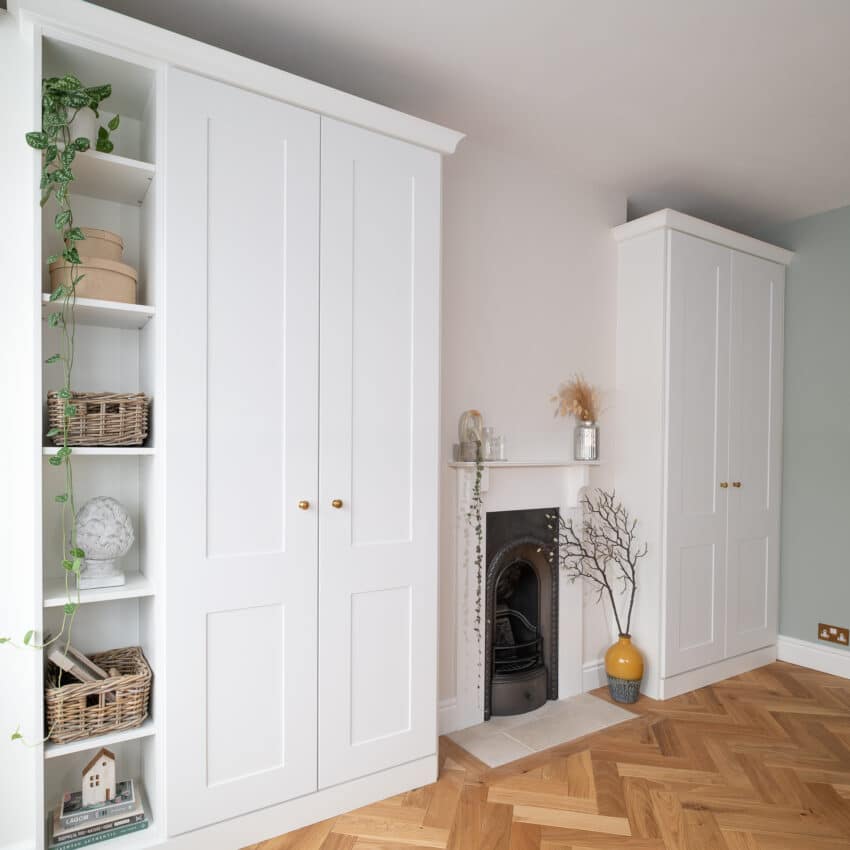
10. Work With Chimney Breasts
Flank a chimney with wardrobes and add a bridging unit or shelving to make it a feature.
Why Choose Bespoke Fitted Wardrobes for a 1930s Home?
- Every millimetre of space is used.
- Styles can be matched to original detailing.
- Interiors are tailored to your storage needs.
- The result feels like it’s always been part of the house.
If you’re ready to turn awkward alcoves and tall ceilings into stylish, organised storage, our design team can create fitted wardrobes that respect your home’s character while adding modern convenience.
Owning a 1930s home is a real privilege. These properties often come with charming architectural details — deep skirting boards, picture rails, generous bay windows, high ceilings and those all-important chimney breasts with alcoves on either side. While these features give a home its character, they can also make it tricky to find wardrobes that fit without compromising space or style.
That’s where bespoke fitted wardrobes shine. Designed and built to your home’s exact measurements, they make the most of every inch — even when alcoves are different widths, ceilings are unusually high, or floors slope ever so slightly. Here’s our guide to 10 modern wardrobe design ideas that work beautifully in 1930s homes, blending contemporary practicality with a respectful nod to period style.
Made-to-Measure for Non-Symmetrical Alcoves
One of the quirks of 1930s houses is that alcoves either side of the chimney breast are rarely the same size. Off-the-shelf furniture often leaves awkward gaps, but a made-to-measure fitted wardrobe can be built to millimetre accuracy. This means each alcove gets a wardrobe that fills it perfectly, giving you seamless lines and a balanced, intentional look — even when the architecture isn’t symmetrical.
Maximising High Ceilings
1930s homes often boast ceilings over 2.7 metres high. Standard wardrobes stop short, leaving dust-collecting gaps above. With fitted wardrobes, we can build all the way up to the ceiling, creating generous storage for out-of-season clothes, luggage or spare bedding in top-box compartments. The result is a sleek, floor-to-ceiling look that feels both grand and efficient.
Shaker Style for Timeless Appeal
While you may want a modern wardrobe, a full-shaker or slim-shaker door profile sits beautifully alongside the era’s architectural features. Painted in muted neutrals like classic white, cashmere, or soft grey, it bridges the gap between period charm and contemporary living. The clean panelled lines reflect traditional joinery while still feeling fresh.

Respecting Picture Rails and Coving
Many 1930s bedrooms still have original picture rails or decorative coving. Rather than removing these features, fitted wardrobes can be scribed around them so they remain visible, or designed to stop just beneath them for a ‘built-in’ look that still celebrates the room’s history. This sympathetic approach keeps the furniture feeling like part of the house rather than something imposed on it.
Mirrored Doors to Enhance Light
Some 1930s bedrooms can feel a little dim, especially if the bay window faces north. Mirrored wardrobe doors bounce light around the room and create an illusion of extra space. Full-panel mirrors work well for a modern feel, while half-mirror panels framed in shaker doors give a softer, more classic look. They also double up as a practical dressing-room feature.
Built-In Dressing Tables and Desks
Fitted furniture isn’t just about storage. In alcoves beside chimney breasts, we can integrate a dressing table, desk, or even a reading nook between wardrobes. This is perfect for smaller rooms where you want every inch to work hard without feeling crowded.
Bespoke Interiors for Better Organisation
With a 1930s bedroom, the external style is only half the story. Inside, custom interiors can transform how you use the space. For example: Double-height hanging rails for shorter garments like shirts and trousers. Pull-down rails for high ceilings, so top sections remain practical. Deep drawers for knitwear and accessories. Slide-out shoe racks to keep footwear tidy and easy to reach. Illuminated shelves for handbags or display pieces.
Everything is planned around your wardrobe contents, not a generic template.
Fitting Around Bay Windows
Bay windows are a hallmark of 1930s architecture, but they can make furniture placement awkward. One solution is to run wardrobes along the opposite wall, then echo the bay’s curve with a fitted window seat or dressing area. This balances the room visually and maximises usable floor space without blocking natural light.
Two-Tone Colour Schemes
To bring a 1930s bedroom into the 21st century, consider two-tone fitted wardrobes — for example, classic white frames with doors in a warm oak finish. This picks up on the natural wood tones often seen in period doors and flooring, while introducing a modern twist. A subtle nod to the past, yet fresh and personal.
Integrating with Chimney Breasts
If you still have a chimney breast, you can incorporate it into the design. Wardrobes can flank either side, or you could opt for open shelving for books and decor. By working with the room’s shape, you avoid wasting space and create a feature that feels intentional, not like a compromise.
Designing with Sympathetic Precision
The real magic of fitted wardrobes in 1930s homes is how they can respect — and even highlight — the original features rather than hide them. We always take detailed measurements, including ceiling height, alcove depth, and any slopes or quirks. Our designers work out how the wardrobes will align with skirting boards, picture rails, and window frames so nothing feels jarringly modern in a period setting.
Even the choice of handles can make a difference. Slim, brushed-metal handles feel understated, while vintage-inspired knobs or brass pulls add a heritage feel. Soft-close hinges and concealed lighting bring you all the comfort of modern living without clashing with the home’s architecture.
The Benefit of a Bespoke Service
Buying fitted wardrobes isn’t just about filling a gap. It’s about investing in furniture that looks like it’s always been there — and works perfectly for your lifestyle. Our bespoke approach means:
-
Every millimetre counts — no wasted space, no filler panels unless absolutely necessary.
-
Personalised interiors — we design inside layouts around your wardrobe contents.
-
Style compatibility — finishes and profiles that complement 1930s detailing.
-
Future-proofing — solid construction and timeless designs that last.
Whether you prefer an elegant shaker door in soft white, a bold modern finish, or a mix of textures, the key is tailoring every detail to both you and your home.
Bringing It All Together
A well-designed fitted wardrobe doesn’t just give you storage. In a 1930s home, it can bring a sense of harmony between the past and the present. By respecting the proportions, celebrating the quirks, and using clever modern design, you get furniture that enhances the room rather than competing with it.
If you’re living with non-symmetrical alcoves, high ceilings, or architectural details you want to preserve, the right fitted wardrobe can turn those so-called ‘awkward’ features into the best parts of your bedroom. Done well, it will feel like it belongs — as if it were part of the house from the very beginning.