



Are Sliding Wardrobes Really Better for Small Bedrooms?
The usual advice – ‘small rooms need sliding wardrobe doors’ – is helpful but incomplete. Door movement is only one part of the design. A fitted wardrobe must also be easy to see into, organise and use every day…
When do Sliding Doors Solve a Genuine Problem?
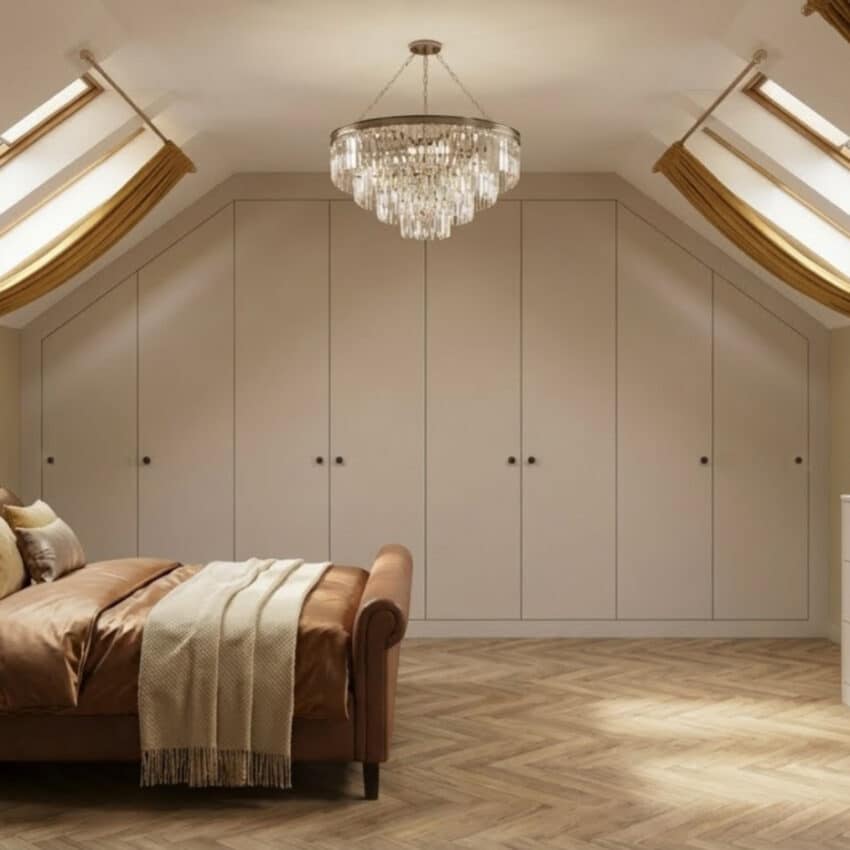
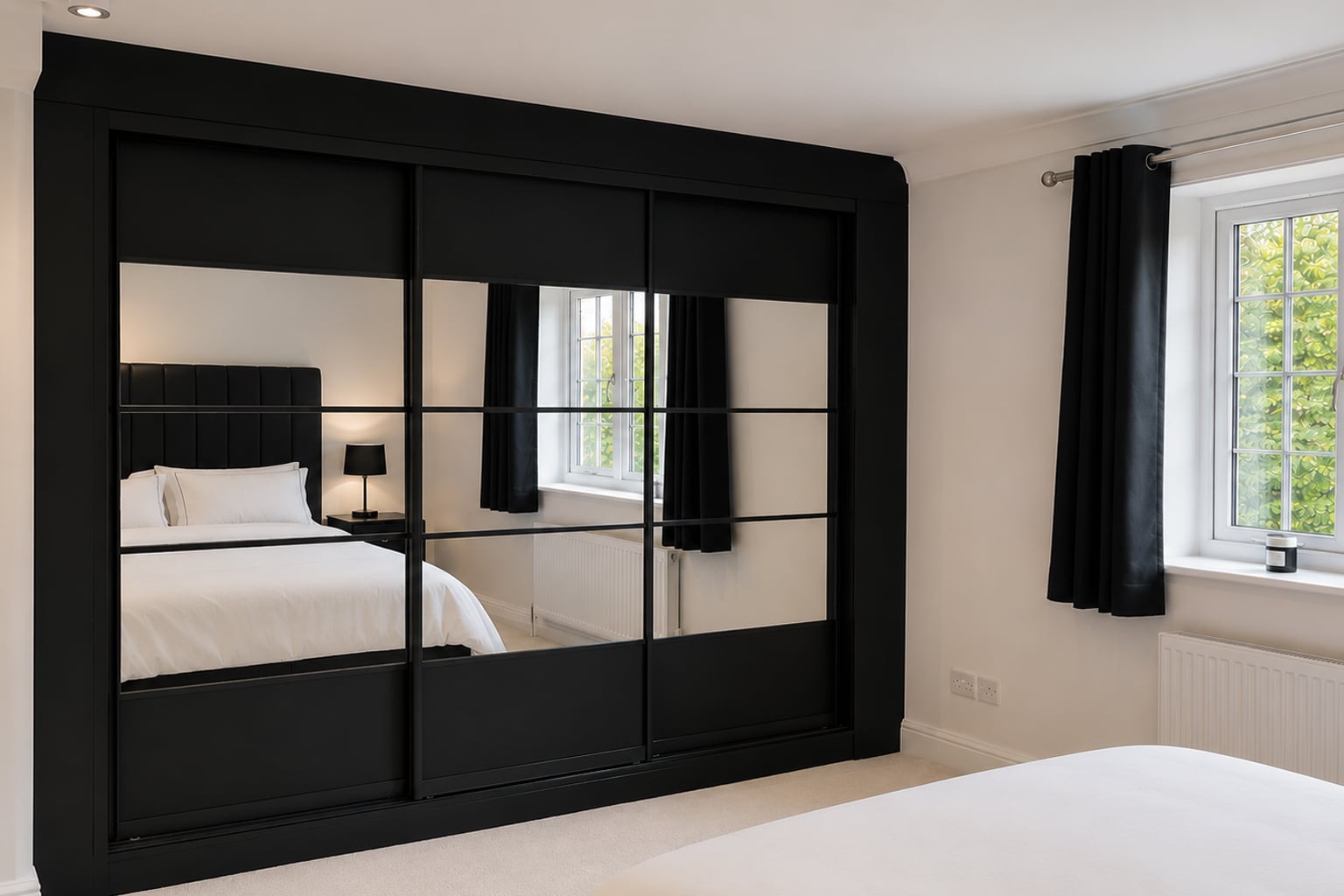
Imagine a bedroom with 650 to 800 millimetres between the foot of the bed and the wardrobe. A hinged door opening into that route may force the user to step aside or close one door before moving. A sliding door stays within the wardrobe footprint, keeping the walkway clear. This makes sliding wardrobes particularly useful in narrow bedrooms, rooms where the bed cannot move and some loft conversions. Broad sliding panels can also create a calm, contemporary appearance with fewer vertical breaks across the wall, whilst mirrors can be incorporated into selected panels to provide a full-length view and reflect light around the room too – this can remove the need for a separate standing mirror, saving a little more floor space.



What is the Trade-Off?
Sliding doors overlap, so part of the fitted wardrobe remains covered even when a door is open. If two people share the same run of wardrobes, they may not be able to access adjacent sections at the same time. Very wide drawers or pull-out fittings also need to align with the available opening. A custom wardrobe designer should therefore plan the internal sections and sliding panels together. The door widths cannot be decided first and the storage fitted behind them as an afterthought.
Tracks and door systems on sliding fitted wardrobes also need correct installation and a suitable floor line. Quality components and accurate fitting matter hugely here, because a large sliding door is used repeatedly and must remain smooth and aligned.
When are Hinged Doors Better for Fitted Wardrobes?
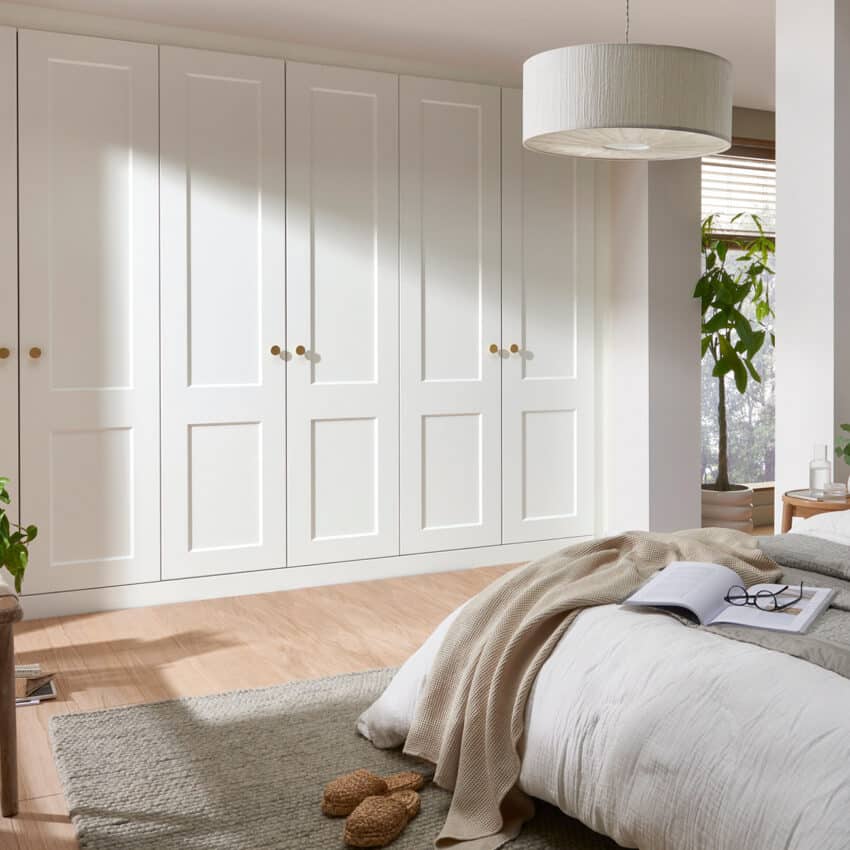
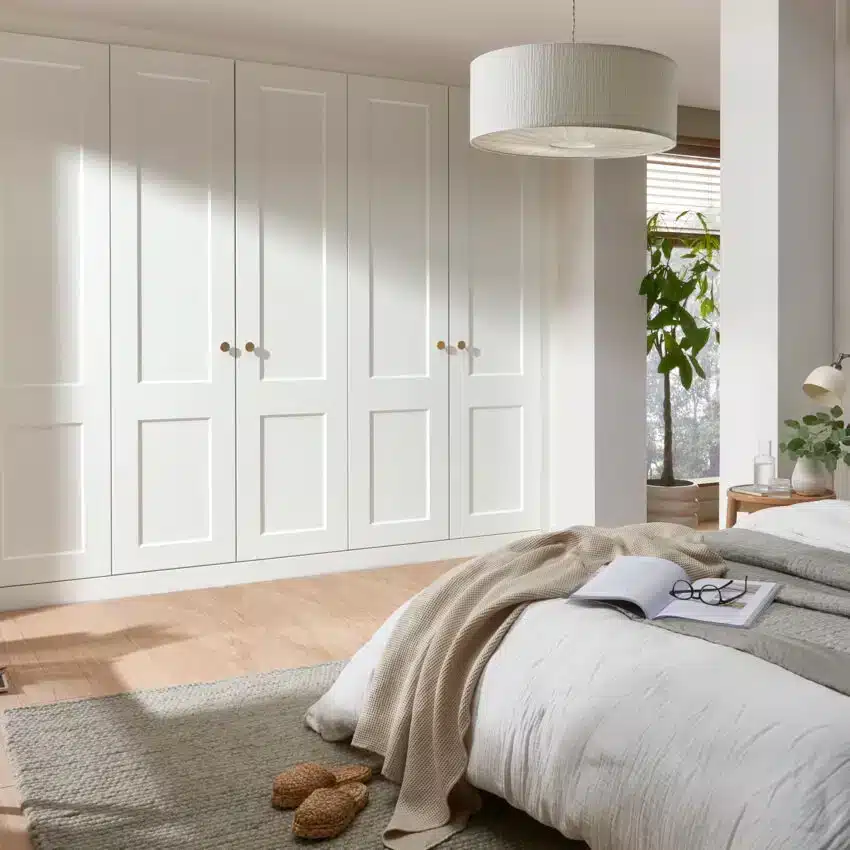
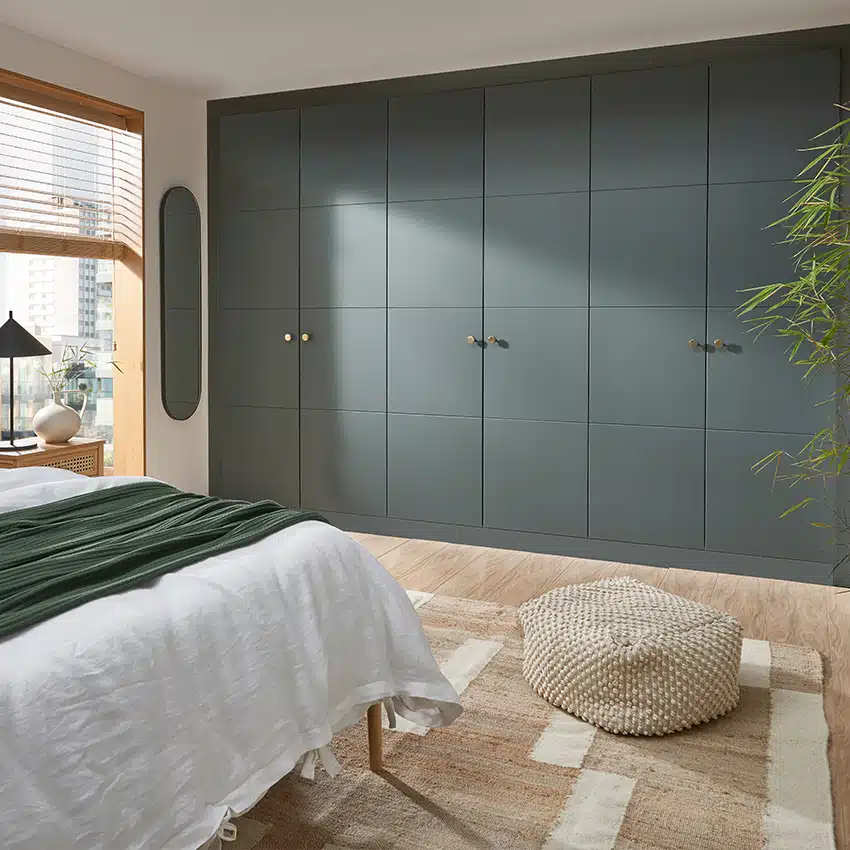
Hinged doors can expose several sections of a built in wardrobe at once. That wider view is helpful for customers who like to see outfits, drawers and accessories together whilst getting ready. The inside face of a hinged door may also accommodate certain useful features, depending on the design. More importantly, hinged doors offer great flexibility across narrow or irregular sections where a sliding panel would be impractical.
If there is comfortable clearance between the wardrobe and bed, choosing hinged doors does not make a small bedroom badly designed. The room may feel more traditional, the interior may be easier to access and the door proportions may suit the architecture better.
Does a Sliding Fitted Wardrobe Provide More Storage?
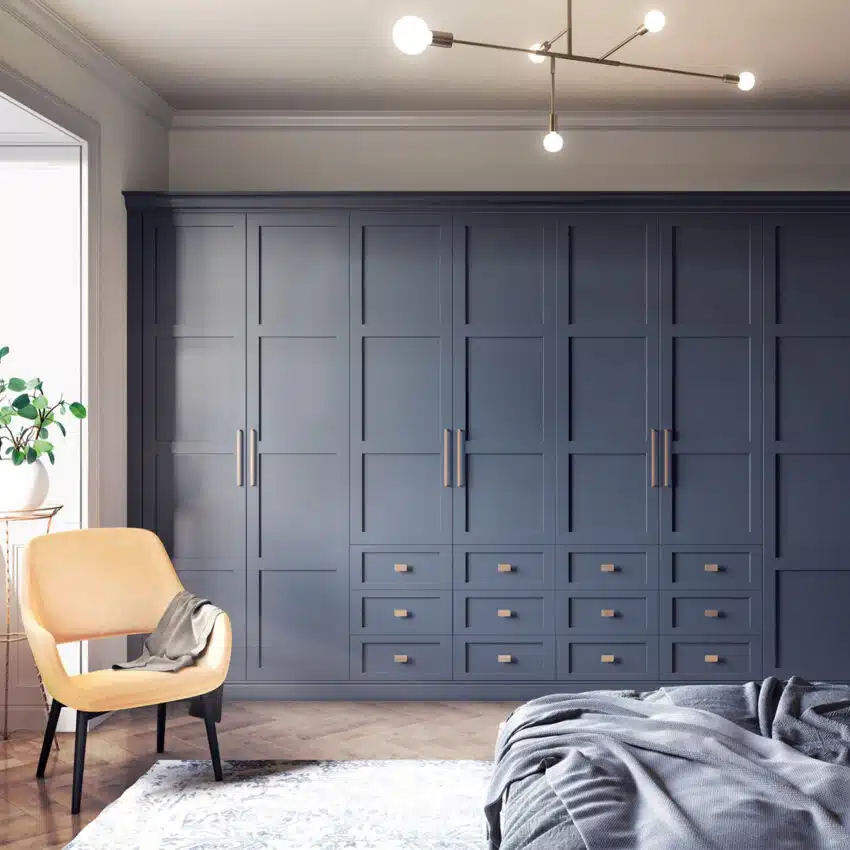
Not inherently. Sliding doors save space in front of the wardrobe; they do not automatically create more internal capacity. Storage volume depends on the overall width, height, depth and internal design. The real space related opportunity comes from installing the fitted wardrobe from wall to wall and, where appropriate, from floor to ceiling. Internal drawers can remove the need for a chest of drawers in the room, whilst tailored internal features like hanging space or shelving will reduce any wasted storage space. These decisions often make a bigger difference than the door mechanism alone.
What Should You Measure?
Look at the narrowest point between the proposed wardrobe and the bed, including any bedding overhang. Consider bedside furniture, radiators, window openings and the path from the doorway. Then think about use: does one person need access, or two; do you prefer to see the whole wardrobe when getting ready; will drawers be open while you stand in front of them? These answers turn a general rule into a room-specific decision.
What My Fitted Bedroom Thinks
Sliding fitted wardrobes are excellent space planners, but they should solve a real clearance problem or support a design that you genuinely prefer. They are not a badge that automatically makes a fitted bedroom more efficient.
For the smallest rooms, compare both layouts on a measured plan. If hinged doors interrupt the walkway, sliding doors are likely to be the better option. If clearance is comfortable and full access matters more, hinged fitted wardrobes may provide the better daily experience.
The best door is the one that works with the bed, the route through the room, the storage behind it and how the customer intends to use the fitted wardrobe. Do you have more questions? Contact My Fitted Bedroom to arrange a consultation with a designer – together, we can explore the next option for you and your home.
Author
Bobby Patel designs fitted wardrobes for My Fitted Bedroom through South West London and has almost 30 years of interior design experience. He has designed thousands of fitted bedrooms, fitted media rooms, fitted home offices, walk-in wardrobes and dressing rooms. With a calm and considered approach to spaces, Bobby designs fitted furniture that works beautifully in everyday life.