

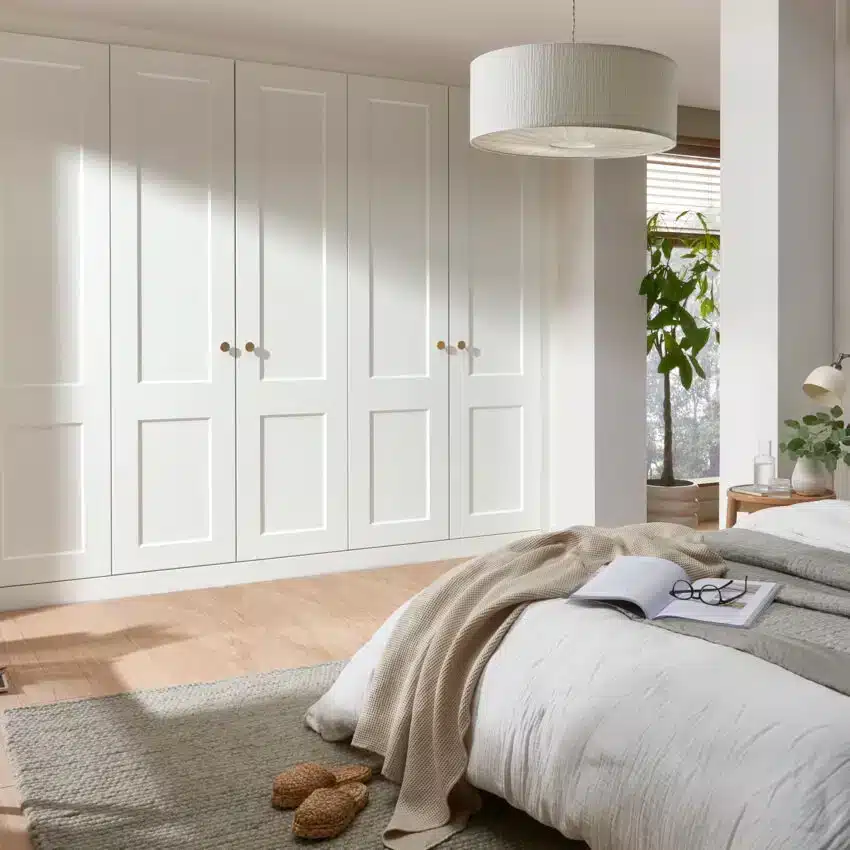
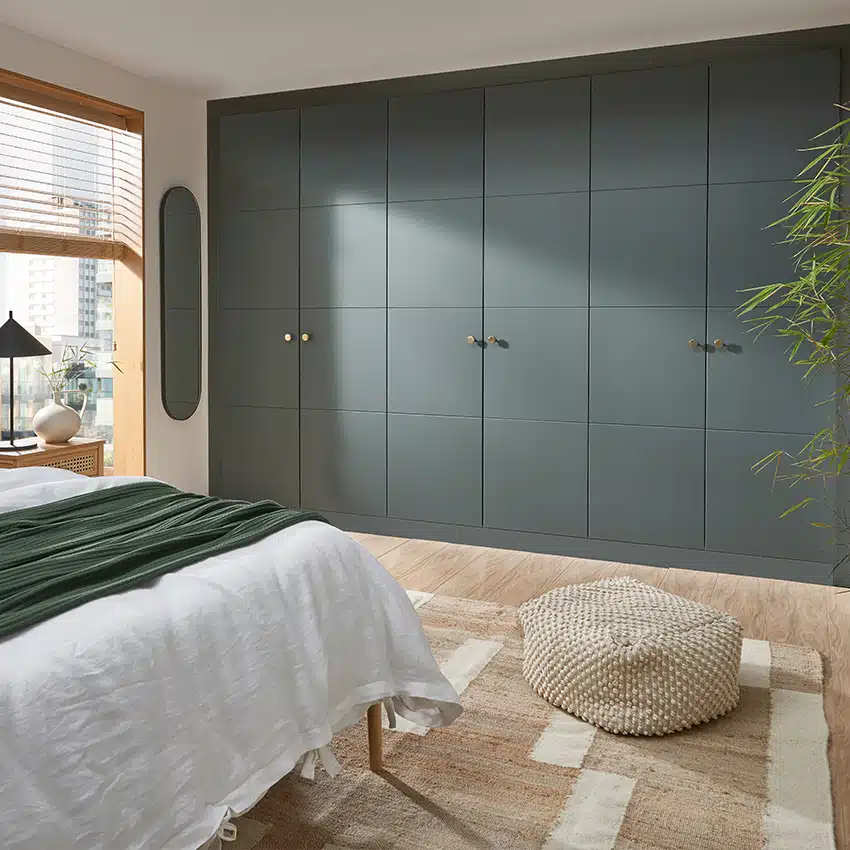
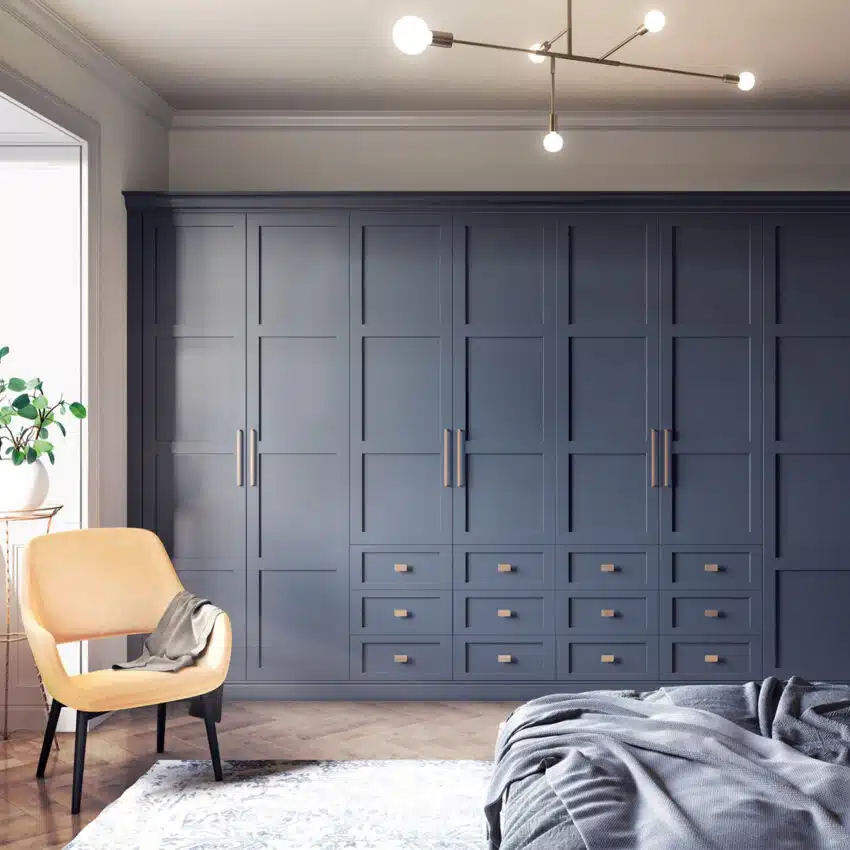



How Deep Should a Fitted Wardrobe Be? Standard UK Dimensions Explained
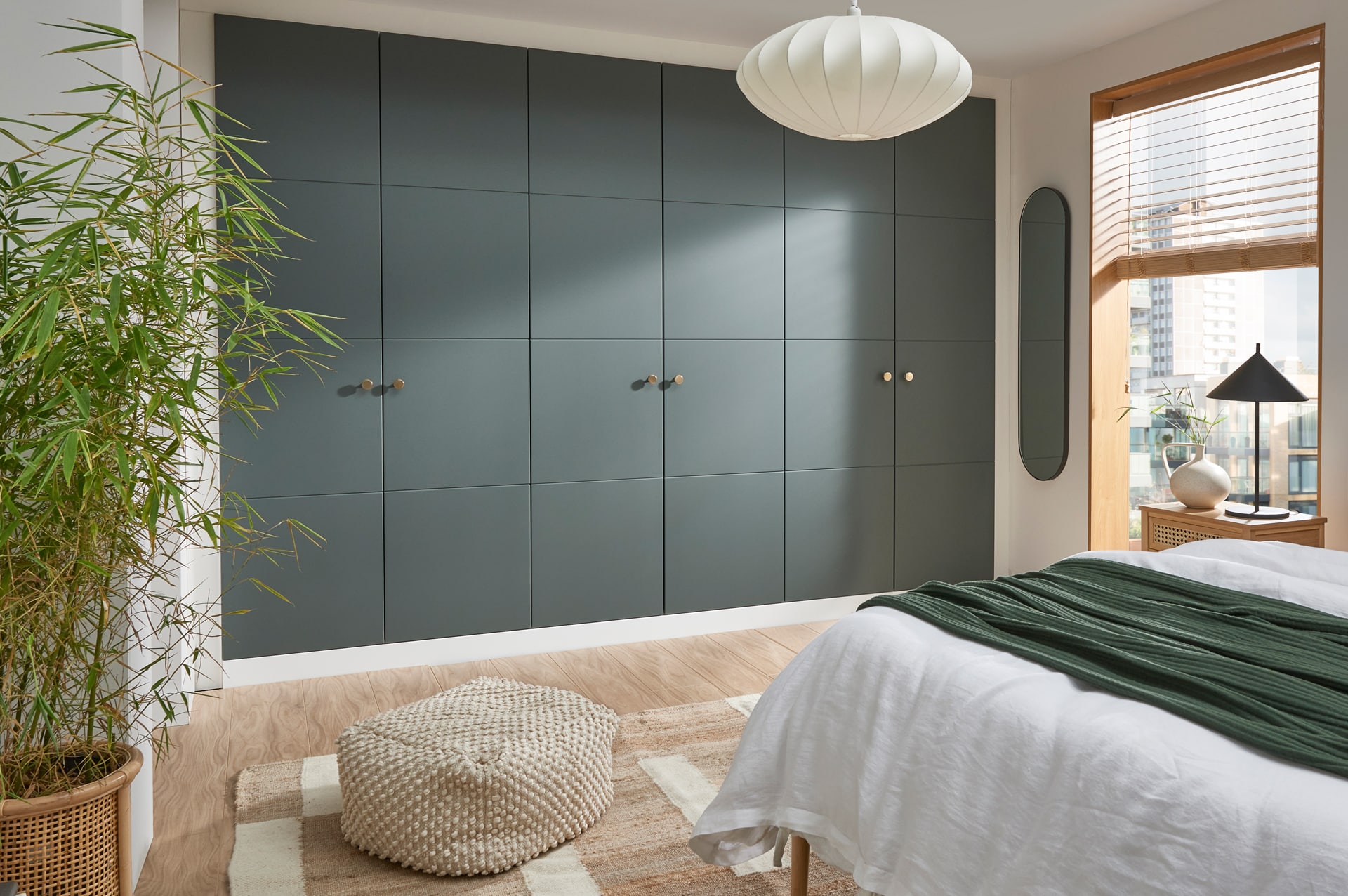
When you are planning fitted wardrobes, colour and door style may be the exciting decisions, but depth is what determines whether the furniture works comfortably every day. A wardrobe that is too shallow can squash sleeves and push hangers against the doors. One that is unnecessarily deep may take valuable floor space from the bedroom, without creating storage you can use effectively.
So, how deep should a fitted wardrobe be? There is no single measurement that suits every room or every storage system, but there are useful starting points. The right answer depends on what you want to store, the type of doors you choose and the amount of clear space needed around your bed and other furniture.
What Is the Standard Depth of a Fitted Wardrobe?
For conventional side-on hanging, many wardrobes are planned around approximately 550–600mm of usable internal depth. The overall fitted wardrobe depth may be slightly greater once doors, tracks, frames and the construction of the unit are taken into account.
This is a guide rather than a universal rule. A bulky winter coat needs more room than folded knitwear, while a sliding-door system and a hinged-door design can have different construction requirements. Bespoke fitted wardrobes are measured and configured for the actual room, so the final depth should balance comfortable storage with easy movement through the bedroom.
Why Do Hanging Clothes Need So Much Depth?
A standard clothes hanger is usually around 400–450mm wide, but the hanger alone is not the full story. Jackets, shirts and dresses flare beyond it, and sleeves need space to hang naturally. The rail also sits inside the wardrobe rather than directly against the doors. If the internal space is too shallow, clothes may sit at an angle, catch as the doors close or become creased. Giving hanging sections sufficient depth allows air to circulate more freely and makes it easier to see and remove garments without disturbing everything beside them.
Can You Have Fitted Wardrobes in a Shallow Bedroom?
Yes. A room does not automatically become unsuitable because it cannot accommodate a conventional full-depth hanging section across an entire wall. A fitted wardrobe designer can vary the internal layout and, where appropriate, the depth of different units. In a particularly narrow area, front-to-back hanging rails can position clothes facing towards you rather than side by side. Shallower sections can be used for folded clothing, shoes, handbags or accessories, whilst deeper hanging space is placed where the room allows it. This is often more effective than forcing every section to use the same depth.



How Deep Should Shelves and Drawers Be?
Shelves do not always need the full depth required by hanging clothes. Depending on what they will hold, shelves of roughly 300–450mm can work well for folded clothing, shoes, handbags and storage boxes. Very deep shelves can actually make organisation more difficult because smaller items disappear behind one another.
Drawers need enough depth to be useful whilst leaving space for runners, handles and comfortable opening. The right dimensions depend on whether you plan to store small accessories, underwear, knitwear or bulkier items. This is why it helps to decide what each section will contain before finalising the wardrobe design.
Do Sliding Doors Make a Wardrobe Shallower?
Sliding wardrobe doors can be a brilliant choice in a narrow bedroom because they do not swing out into the room. This protects the clear space between the wardrobe and the bed. However, the track and overlapping door system still require space within the overall construction, so sliding doors do not automatically mean the wardrobe itself will be shallower.
The real advantage is external clearance. You can stand closer to a sliding wardrobe when opening it, whereas hinged doors need enough room to open fully without hitting the bed, a bedside table or another piece of furniture.
Remember the Space in Front of Your Wardrobe
Wardrobe depth should never be considered in isolation. You also need a comfortable route around the furniture in the space and enough room to open doors and drawers. In many bedrooms, reducing the wardrobe by a few centimetres is less important than adjusting the overall layout, changing the door style or removing the need for a separate chest of drawers.
A well-planned fitted wardrobe can combine hanging, shelves and internal drawers in one run of furniture. That can free up more usable floor space overall, even when the wardrobe itself is deeper than a freestanding alternative.
Why Made-to-Measure Dimensions Matter
UK bedrooms often include chimney breasts, alcoves, sloping ceilings, uneven walls and skirting boards. Measuring only one point on a wall can therefore give a misleading result. A fitted furniture designer will assess the width, height and depth at several points and consider doors, windows, sockets and the route through the room.
At My Fitted Bedroom, your fitted wardrobe is designed around your room and what you want to store. During a free home design visit, an experienced fitted wardrobe designer will measure the space, discuss the balance of hanging, shelving and drawers and help you visualise a layout that makes effective use of every available centimetre.
Be bold, be beautiful. Browse our best sellers.
Frequently Asked Questions
Is 500mm deep enough for a fitted wardrobe?
A 500mm internal depth can be restrictive for conventional side-on hanging, particularly for coats and wider garments. It may still work for shelving, drawers or front-to-back hanging. The best solution depends on the clothes being stored and the wardrobe construction.
Are built-in wardrobes always the same depth?
No. Bespoke built-in wardrobes can use different depths across the same room. For example, a deeper section might contain hanging space while a shallower section provides shelves or a dressing area.
How can I find the right wardrobe depth for my bedroom?
Start with the room layout and the items you need to store, rather than a standard measurement alone. A professional design visit will account for the wardrobe construction, door choice, irregular walls and the clear space needed around the rest of your furniture.
Ready to find the best fitted wardrobe dimensions for your room? Book a free home design visit with My Fitted Bedroom and let our designers create storage tailored to your space and lifestyle.