







Walk-In Wardrobes With or Without Doors? Choosing Open, Closed or Mixed Storage
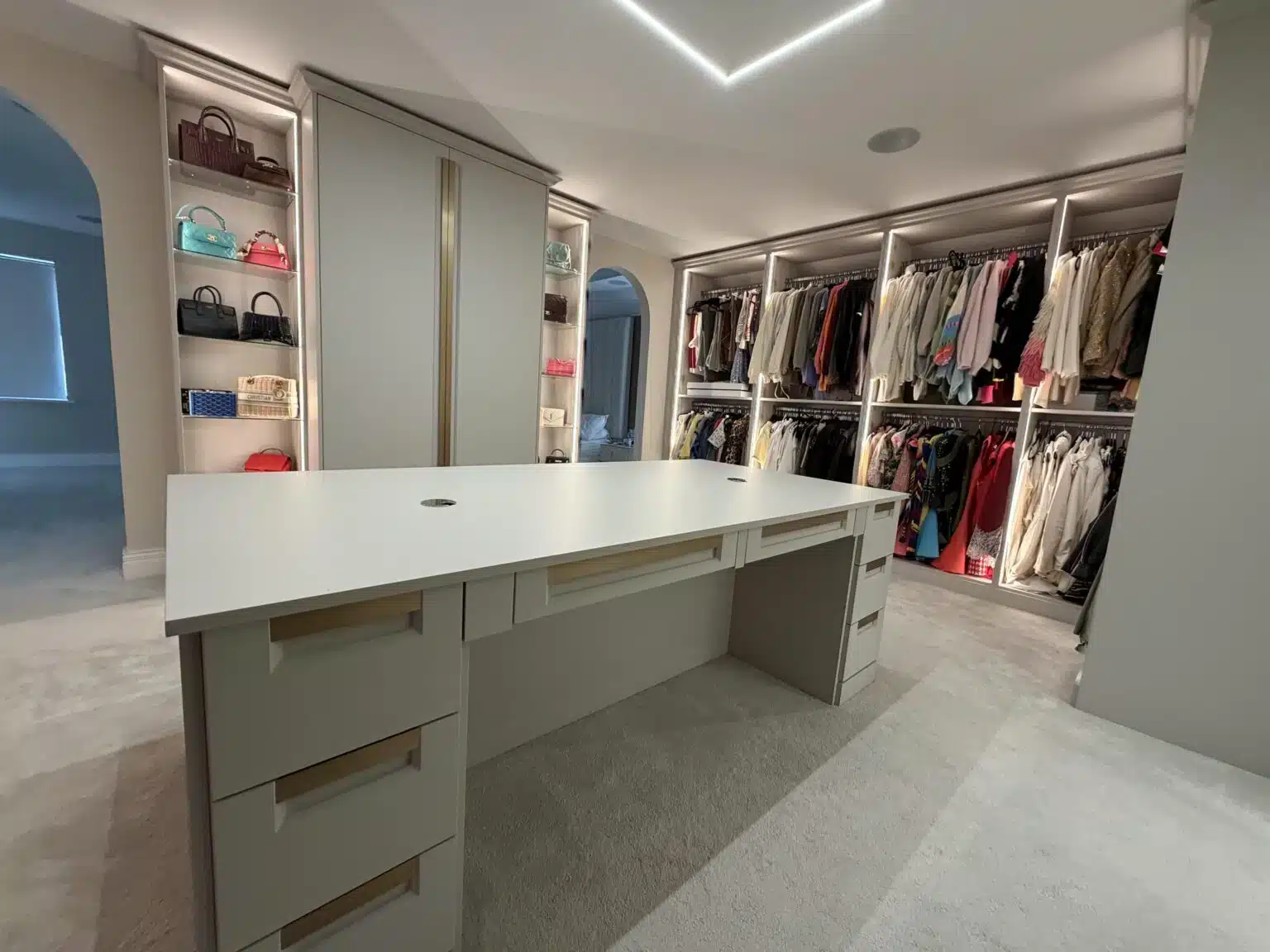
An open walk-in wardrobe makes clothes, shoes and accessories part of the room’s appearance. Closed storage gives you the option to put everything behind doors. Both can look beautiful, but they ask different things from you day to day. The right choice depends on what you want to see, how you put things away and whether the dressing area is separate from your bedroom. You do not have to choose one approach for the entire room. Combining open and enclosed sections can give you easy access to your favourite pieces, whilst keeping less decorative, everyday belongings neatly out of sight.
Open storage makes the contents part of the design
With an open walk-in wardrobe, the clothes and accessories create much of the colour and texture. A row of coats, shelves of knitwear and a collection of bags will all affect how the finished room feels. That can be appealing if you enjoy seeing your belongings and choosing outfits at a glance. It also means the design should account for an ordinary laundry day, not just a carefully arranged photograph. Half-filled shelves, different hangers and folded clothes of varying sizes will be visible.
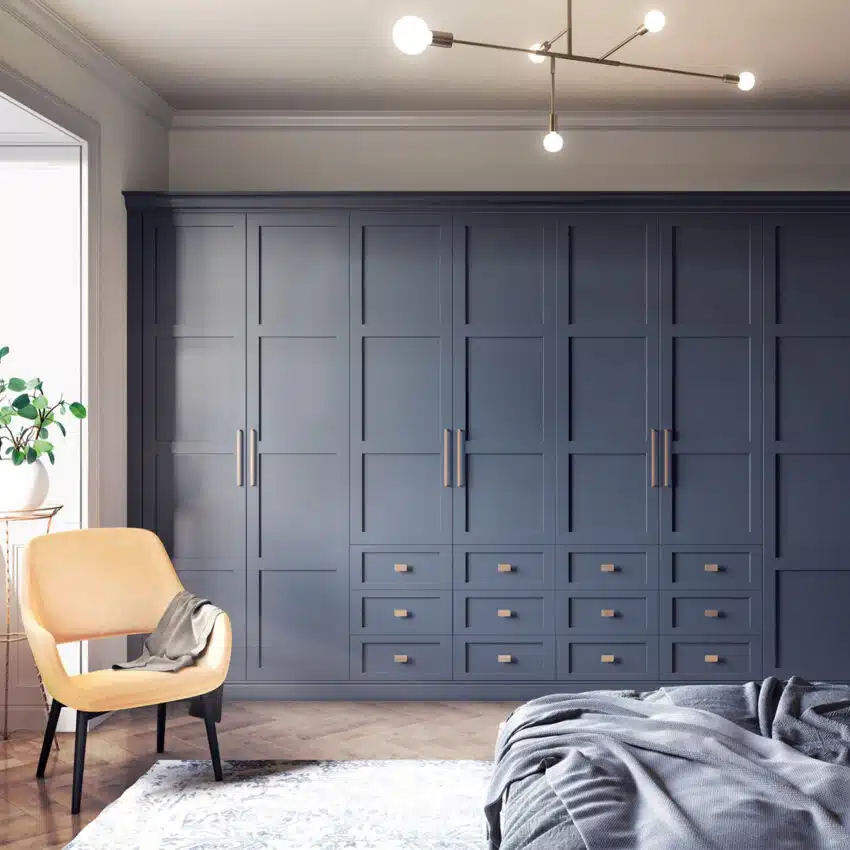
Our walk-in wardrobes and fitted dressing rooms can combine open storage, fitted doors and drawers. The balance can be planned around both the look you like and what you need to keep in the room.
Closed storage gives you control over what’s visible
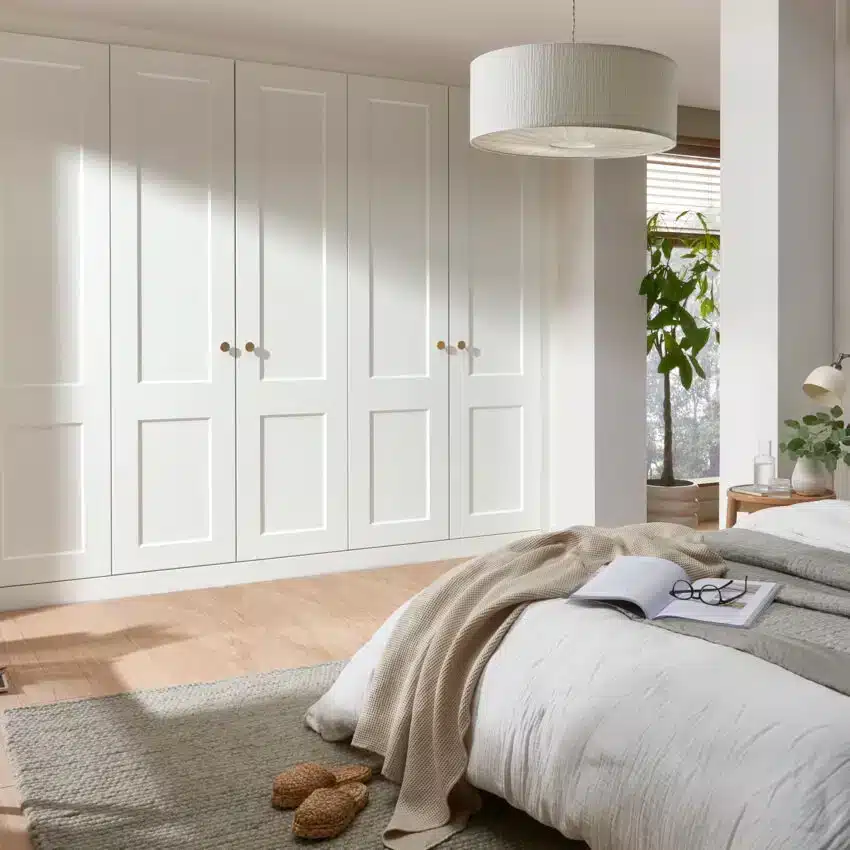
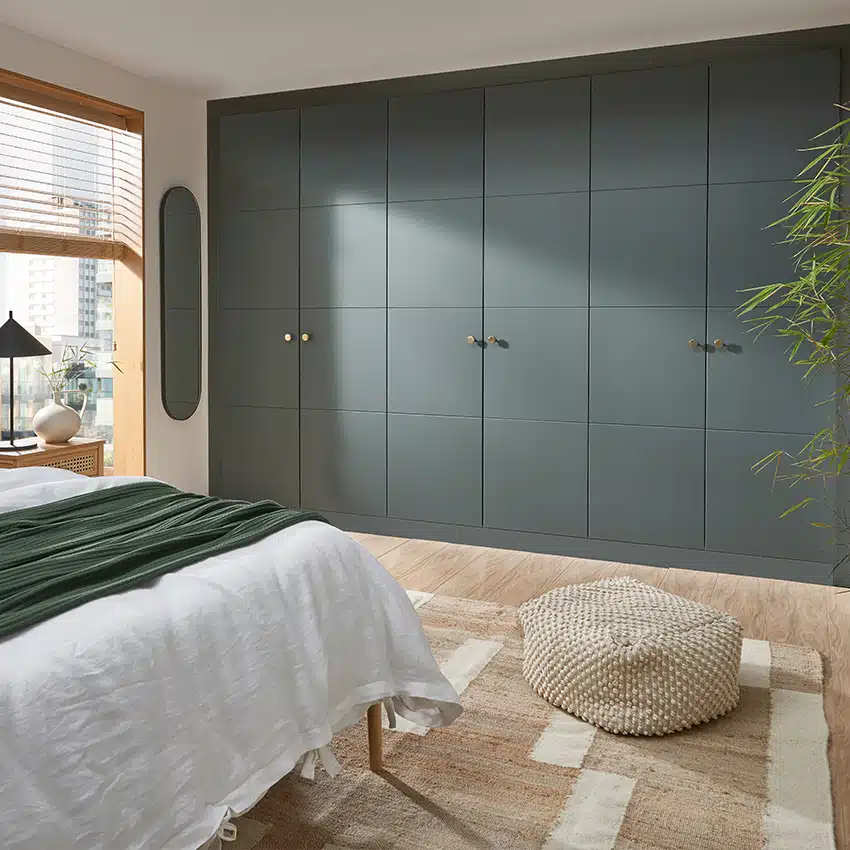
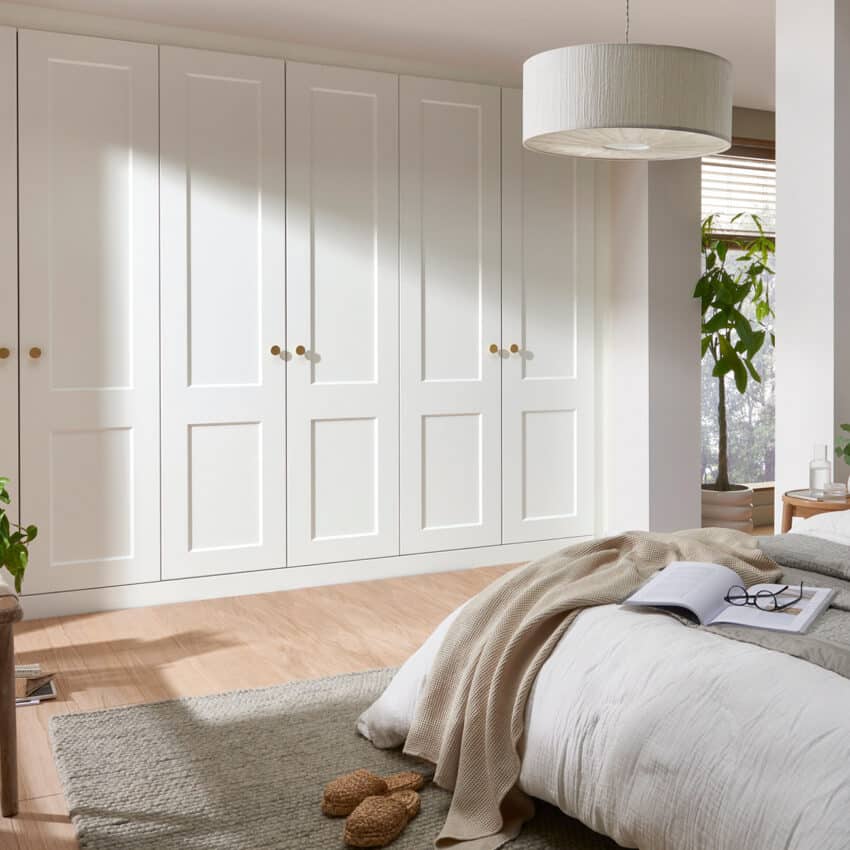
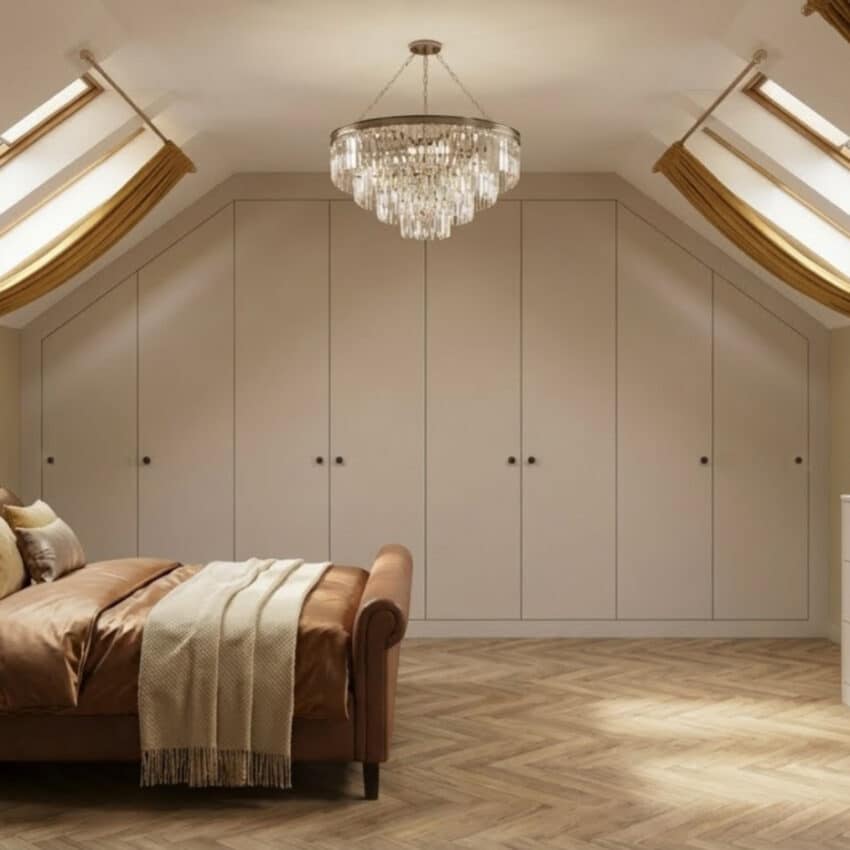
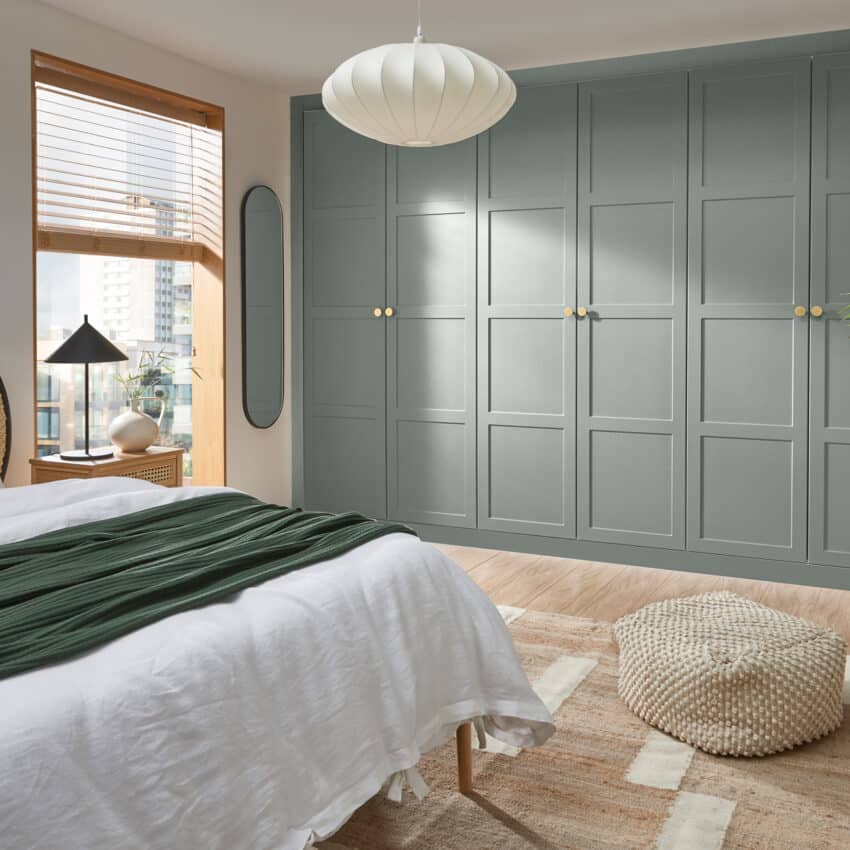
Fitted wardrobe doors can create a quieter backdrop when a dressing area opens directly onto the bedroom. They’re particularly useful for belongings that are practical, but not especially attractive on display: spare bedding, sports kit, travel bags or a mixture of everyday clothes.
The exterior can repeat a consistent finish even when the contents behind each section are quite different. This can help a room feel visually organised, without requiring every shelf to be styled. However, the doors need to work with the layout; hinged doors require room to open, and sliding systems need careful planning so the opening gives access to the section you want. Closing off the storage is only useful if getting to it remains easy.
Think about cleaning and everyday upkeep
Open shelves leave their contents exposed to everyday room dust. Cleaning involves working around those belongings, so consider how much display shelving you will realistically maintain.
Doors can reduce exposure to dust, but an enclosed fitted wardrobe is not a sealed container. Both arrangements still need regular cleaning and the room itself needs suitable ventilation.
If you want to display a few bags or favourite shoes, a small open section may give you the effect you like, without turning the whole dressing room into a display to maintain. Frequently used items are often easier to manage in open storage than pieces left untouched for months.
Plan for the view from the bedroom
Stand where you will normally see the dressing area: beside the bed, in the doorway or at a dressing table. What would be directly in view? If the entrance frames one particular wall, that wall could carry the calmest part of the design. Closed doors or a carefully chosen display section may work well there, with more functional open hanging positioned elsewhere.
In a separate dressing room, the view may matter less than immediate access. You might prefer to see everything as you walk in, particularly if selecting clothes and accessories is the room’s main purpose.
Use a mixed layout to solve specific problems
Start with your belongings rather than an arbitrary split between open and closed units. Different categories can justify different treatment:
- Open hanging for clothes you wear regularly and want to see together;
- Drawers for small garments and accessories that benefit from containment;
- Enclosed shelves for mixed household storage or items you prefer hidden;
- A limited display area for your favourite bags, shoes or decorative objects.
For example, someone with a colourful everyday wardrobe and a collection of travel bags might enjoy open hanging but prefer the bags behind doors. Someone who likes a calm bedroom view might reverse the emphasis, keeping most clothes enclosed and displaying only a few pieces. These are starting points for a design conversation, rather than rules about what belongs where.
Be bold, be beautiful. Browse our best sellers.
Think about how two people will use the room
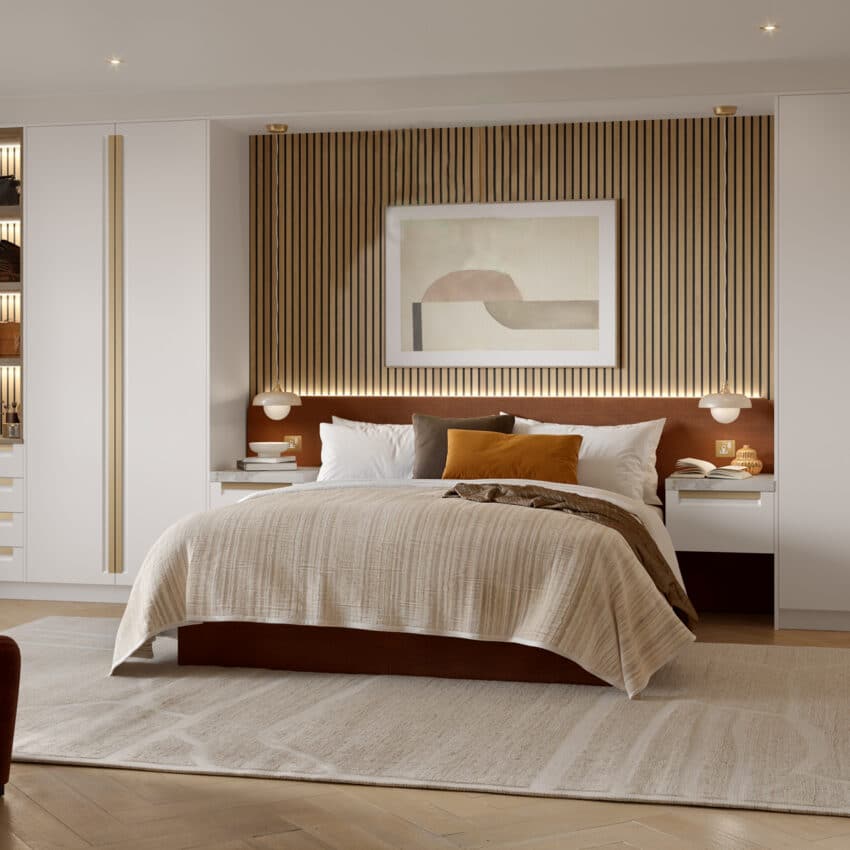
If you share the dressing area, discuss your routines separately. One person may like seeing every option, whilst the other prefers belongings put away behind doors. Also consider simultaneous access; doors, drawers and people can compete for the same space. Walk through a typical morning with the designer: where would each person stand, which compartments would they open and where would they put the clothes they’re selecting?
Our bespoke wardrobe interiors can be discussed around those individual needs, rather than assuming identical storage will suit both people.
Design your walk-in wardrobe around your normal day
Choose a dressing room that works when you are getting ready in a hurry, as well as when everything is freshly organised. Book a free home design visit with My Fitted Bedroom to explore open, closed and mixed walk-in wardrobe storage built around your room and routine.