




What’s the Difference between Full Cabinet and Front Frame Fitted Wardrobes?
What Are Full Cabinet Fitted Wardrobes?
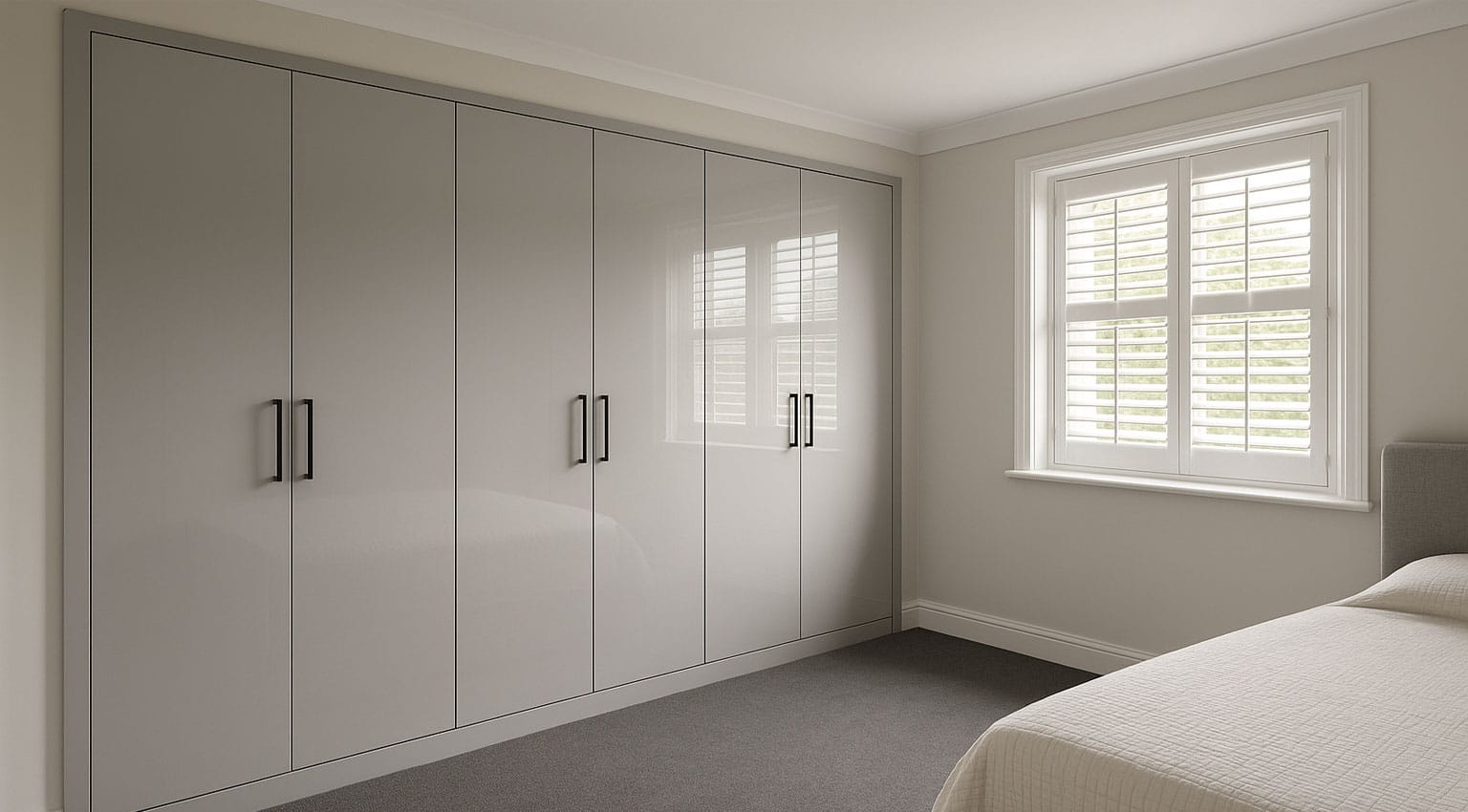
Full cabinet construction refers to wardrobes that are built as complete units – like freestanding furniture – but fitted into a space. Each wardrobe section has its own full box-like structure: solid backs, sides, bases, tops, and doors. Once assembled, these full cabinets are installed into alcoves, along walls, or in awkward spaces like under eaves or sloped ceilings.
This approach mirrors how a kitchen is fitted, with each cabinet being a self-contained module. Materials are usually MFC (melamine-faced chipboard), with precision cut panels forming the internal structure.
What Are Front Frame Fitted Wardrobes?
Front frame only wardrobes skip the full cabinet carcass and instead use a skeletal framework at the front, from which the doors are hung. The wardrobe relies on the room’s existing walls, ceiling, and floor to form the interior “box”. When we use this system we only ever use 18mm furniture grade materials, rather than the 16mm MFC some of the national companies offer.
Internal storage elements – such as shelves, hanging rails, and drawers – are fixed directly to the room’s surfaces or supported by brackets or rails. This system uses fewer materials, and in many cases, the interiors are open to the surrounding room structure.



Manufacturing and Installation Differences
- Manufacturing
- Full Cabinet Construction:
Each component (sides, back, top, base) must be cut, edged, and finished before delivery or on-site assembly. Factory tolerance is important to ensure a precise fit when joining all panels so it is important that manufacturing process and equipment is first rate. More materials and labour go into manufacturing each unit. - Front Frame Only:
Fewer components are needed. A face frame is fabricated, often with timber support battens and minimal joinery. The focus is on cutting for the front framework and any shelving or rails.
- Installation
- Full Cabinet Construction:
Carcasses are usually assembled on-site, then carefully moved into place and fixed to walls or each other. The fit must accommodate existing room angles and uneven floors, which may require scribing and infills. - Front Frame Only:
Installation starts with measuring and battening the space. The framework is then fixed in position, and doors hung onto it. Internal fittings are fixed directly into place. Installation is generally faster, but more time is needed to accommodate irregular walls and ensure squareness.
Our team are on hand to help you make the most of your space
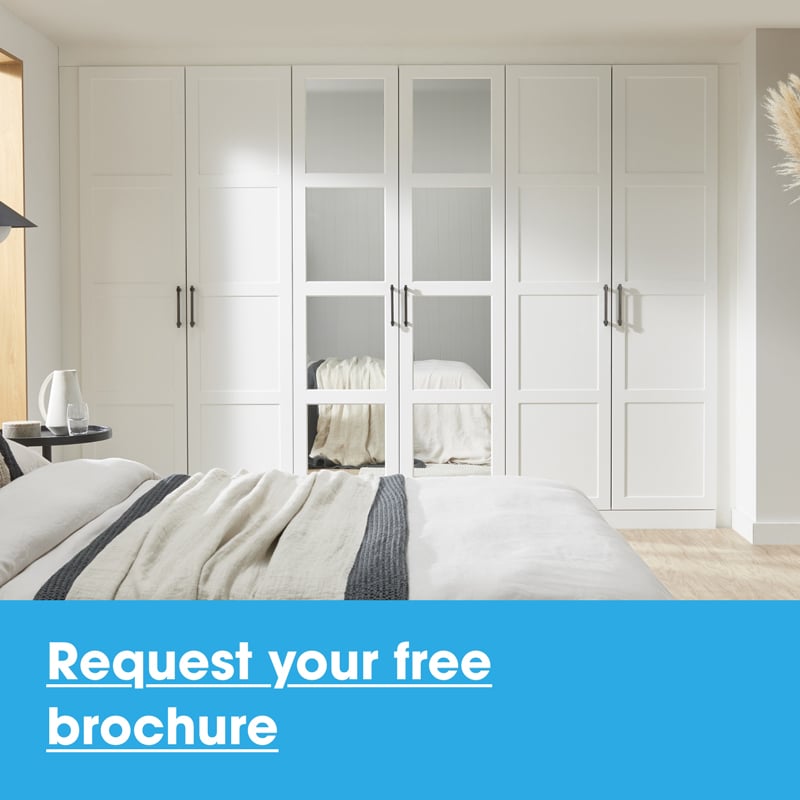
Our free brochure guides you through the steps to creating an expertly organised space. Book your free consultation with our team today, either in your home or virtually to get started on your project.


Pros and Cons of the Full Cabinet Construction
Pros:
- Neat Internal Finish:
Full backs and sides provide a clean, consistent look regardless of the condition of the walls behind. - Better Damp Protection:
Wardrobe contents are less exposed to cold or damp walls as the cabinet forms a protective barrier. - Minimal Internal Maintenance:
Once installed, the wardrobe interior doesn’t need decorating. It hides plaster cracks, wallpaper remnants, or flaky paint. - Strong Structural Integrity:
These units are sturdy and self-supporting, ideal for large spans or heavy use. - Easier to Clean:
Smooth internal panels are easy to wipe down and keep looking fresh.
Cons:
- Uses More Material:
Full carcasses require more wood or board, making them heavier and potentially more expensive. - Reduces Internal Space Slightly:
The side and back panels take up room, which can slightly reduce usable storage compared to a frame-only system. - Harder to Retrofit:
Once installed, access behind the cabinet is limited. If wiring or pipework runs behind, you’ll need to dismantle the units for access.
Pros and Cons of the Front Frame Construction
Pros:
- Maximises Space:
With no side panels or backs, every inch of wall-to-wall and floor-to-ceiling space can be used. - Cost Efficient:
Less board material is used, and manufacturing is simpler, making it a more affordable option. - Flexible for Odd Spaces:
Great for irregular rooms or sloped ceilings where walls can serve as the internal boundary. - Lighter Installation Footprint:
Fewer materials to transport and quicker fitting time.
Cons:
- Requires Wall Prep:
The walls inside the wardrobe are visible and may need painting, plastering, or sealing before and during use. - Ongoing Maintenance:
Exposed plaster may need repainting every few years, especially if clothes scuff the surface or condensation causes damage. - Prone to Damp Issues:
If installed on a cold external wall, clothes may absorb moisture or develop musty smells due to lack of air gap and insulation. - Not Ideal for Crumbling Walls:
Poor plaster or flaky finishes behind the frame can make for an untidy or unstable interior. - More Visible Wiring/Pipes:
There’s no back panel to hide unsightly infrastructure, so additional effort is needed to box or route around it.

We’re very confident that you’ll love your fitted wardrobes for many years to come. However, if you have any issues with the quality or installation of our fitted furniture, simply contact our team.

Don’t just take our word for it. Our fitted bedrooms are rated EXCELLENT based on over 3,380 reviews. We pride ourselves on providing only the best fitted furniture to our customers.

We offer an express fitting service on our fitted wardrobes – this is your quickest route to delivery and fitting of your bedroom. Our fitted wardrobe service takes as little as 6 weeks.

Take a look at our impressive collection of classic, contemporary and modern fitted wardrobe finishes. We have over 15 doors and 35 colours available for you to choose to create your perfect fitted wardrobes.
Bare Wall and Decoration Considerations
With frame-only wardrobes, the state of your bare walls is much more important. If the interior is freshly plastered, it must be allowed to fully dry and be sealed with mist coat paint. If left unpainted, walls may absorb moisture from the air (or from clothing) and deteriorate over time. You’ll also need to maintain or repaint interior sections – especially at floor level – every few years.
In contrast, full cabinet interiors stay pristine as the internal panels form a sealed environment. You don’t need to decorate or treat the wall behind, which is especially useful in older properties with flaky plaster, patchy wallpaper, or uneven brickwork.
The Issue of Damp
Damp is a significant concern when fitting wardrobes on external walls – particularly in older homes with limited cavity insulation or poor ventilation.
Why Full Cabinets Help:
- The full rear panel of the cabinet keeps clothes away from cold surfaces.
- Enclosed interiors reduce cold air ingress, helping stabilise internal humidity.
- It also allows for vapour barriers or insulation between the back of the cabinet and the wall if needed.
Why Frame-Only Can Struggle:
- Clothes sit directly next to exterior walls, which may “sweat” in winter.
- Lack of rear panels means condensation is more likely to settle on wall surfaces.
- Without airflow, moisture can build up – especially behind long hanging garments – and lead to mould growth or damage to fabrics.
That said, good design and ventilation (like a small vent grill or breathable panels) can mitigate these issues, but they must be factored in at the planning stage.
Which System is Right for You?
The best option depends on your room and your priorities so we always recommend asking our designer which is best for your specific requirements.
Whether you opt for a full cabinet or front frame only wardrobe system, both can offer beautiful, space-saving storage – but with very different considerations behind the scenes. Full cabinets act like furniture, insulating contents from the room. Frame-only systems rely on your existing walls to do the heavy lifting.
If you’re unsure which route to go down, it’s worth consulting a fitted furniture expert who can assess your space and recommend the best structure for your needs. After all, fitted wardrobes should be more than just beautiful – they should work in harmony with your home’s character, layout, and future maintenance demands.