





Fitted Boot Room Ideas for 2026: What Busy Households Are Asking for Now
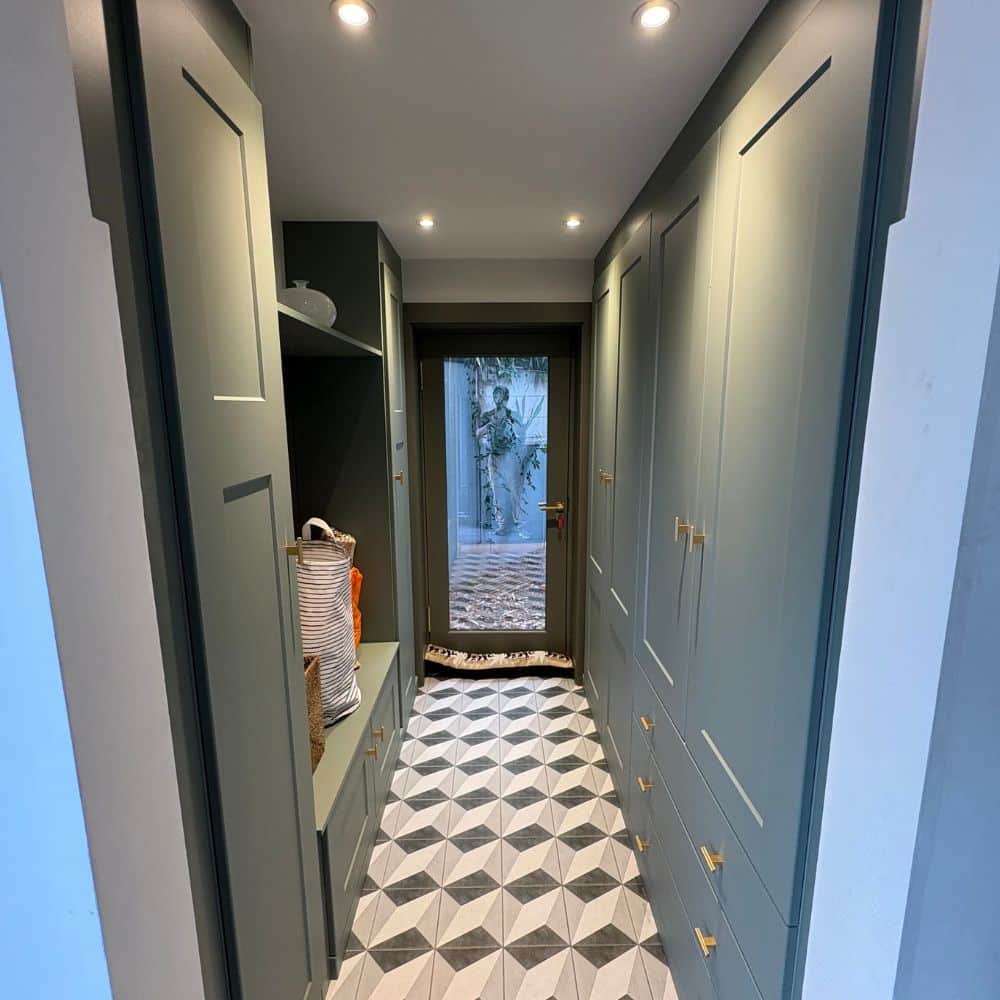
A few years ago, most people thought boot rooms were a luxury reserved for large country estates with a pack of muddy dogs and wellington boots lined up by the door.
But today, they’re actually something very different. And the biggest change is behavioural, not aesthetic. Busy UK households are using boot rooms as everyday ‘drop zones’, with storage designed around family routines rather than simply coat and shoe storage.
Houses are busier, children are living at home for longer and every square metre has to work harder. A fitted boot room isn’t just somewhere to kick off your shoes – it’s the organisational hub of the home where school bags, sports stuff, dog leads, coats, work bags, umbrellas, parcels, reusable shopping bags and all the everyday clutter of family life can have a proper place to live.
“It’s less about what’s trending in interiors and more about how family lifestyles are changing,” explains Keeshak Downey, Designer at My Fitted Bedroom. “Families want a space where everyone can pause, unpack and reset before entering the house. And a well-thought-out boot room really helps stop all that everyday clutter spreading into kitchens, hallways and living spaces.”
Why fitted boot rooms are more popular than ever
Modern homes have evolved incredibly – dining rooms have been turned into home offices; the kitchen has transformed into a space for entertaining and hallways are busier than ever as people come and go at all times of the day and evening. It’s no surprise that people are looking for ways to make the space they have work harder for them.
So, what’s the biggest boot room trend for 2026? It might surprise you, but the single biggest change we’re seeing isn’t a specific colour of cabinet style – it’s the way we’re actually designing boot rooms in the first place: around family routines rather than furniture.
“The conversations we’re having with customers have really changed,” says Keeshak. “Instead of asking us how many cupboards they need in a particular space, they’re talking us through their morning routines – who’s leaving the house when, what times the dog gets walked and where everyone’s coats and bags end up at the end of the day. Once you understand that, it’s so much easier to design storage solutions that genuinely make their lives easier.”
Fitted boot room ideas from real homes
Every family’s home and routine is different. And that’s why no two fitted boot rooms are exactly alike. Here’s some of Keeshak’s favourite recent real-home installations, showing how storage can be tailored to different layouts and lifestyles.
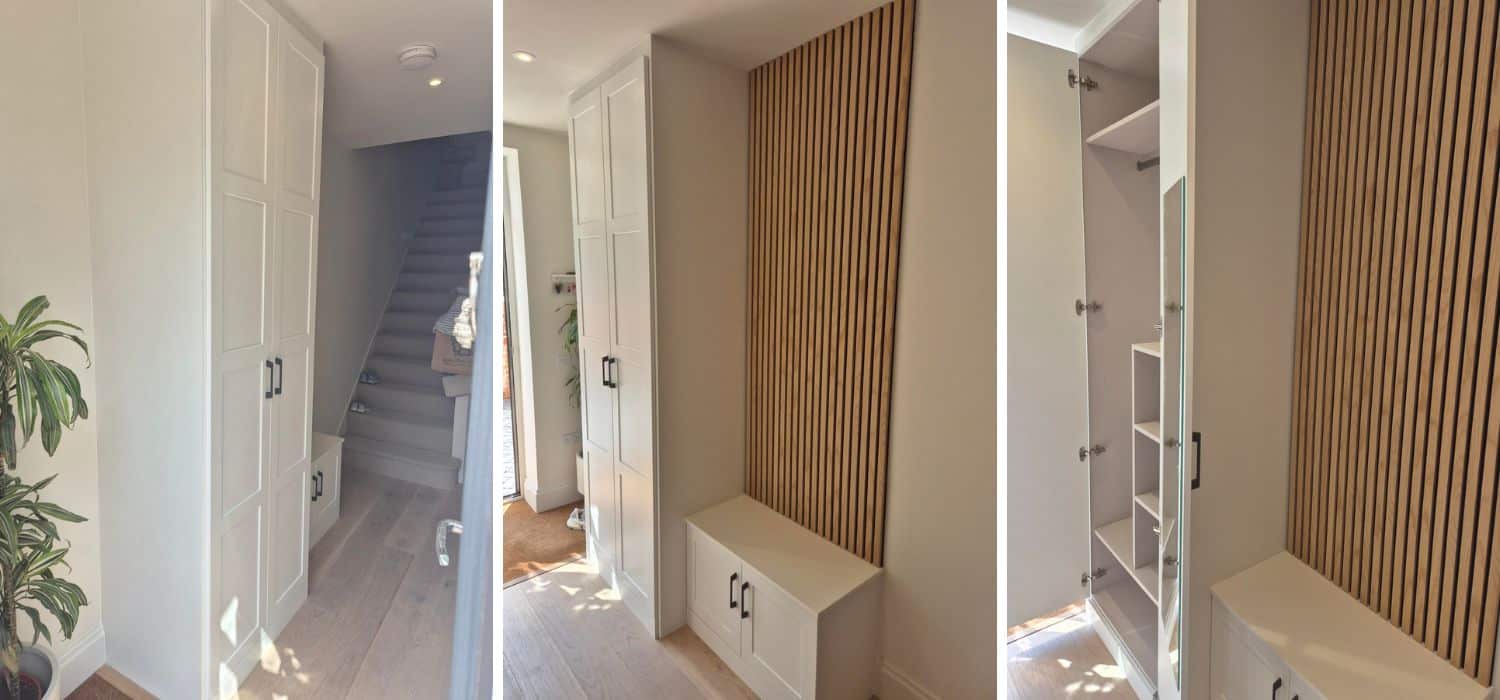
Can you have a boot room in a narrow hallway?
This compact London hallway demonstrates how even a narrow entrance can become an organised drop zone with a combination of tall cupboard space, and a built-in storage bench that’s a handy perch for putting on shoes. The 4-panel shaker Elise doors and contemporary oak feature panelling add extra visual interest to the design.
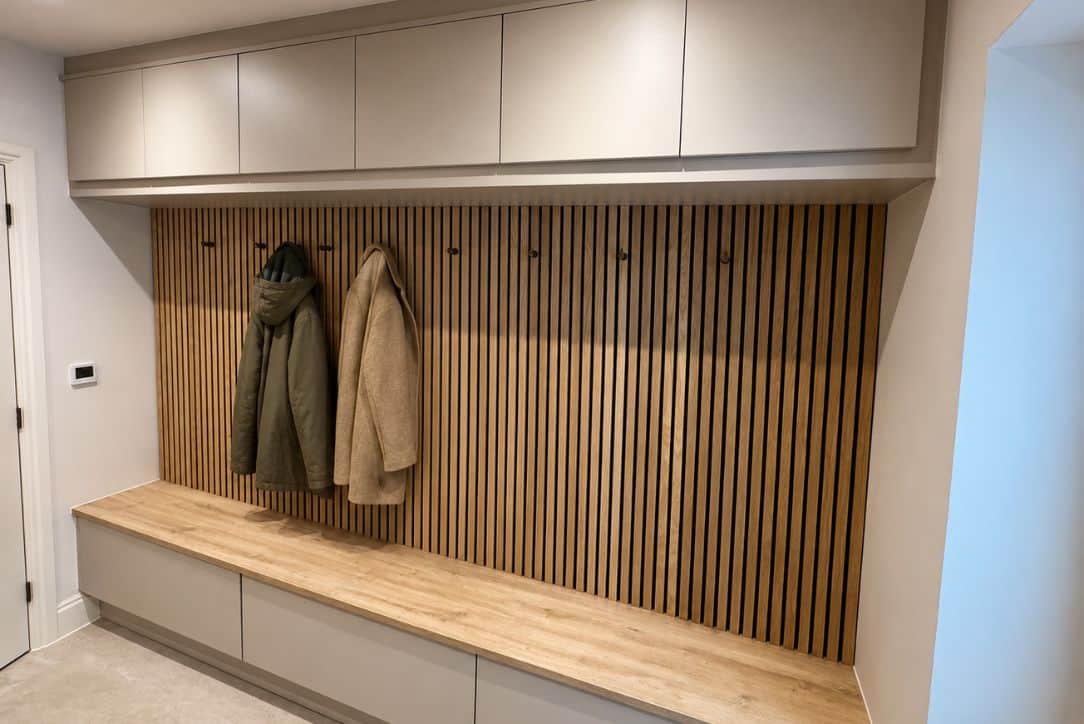
How do you create a dedicated space for everyday clutter?
This Cheltenham home now has a dedicated drop zone for the family to put coats and bags as soon as they walk through the door. There’s an abundance of useful storage space – the overhead cabinetry (our Cassia door in cashmere) is ideal for less frequently used items, and the concealed bench storage means school bags and shoes don’t migrate into the rest of the house.
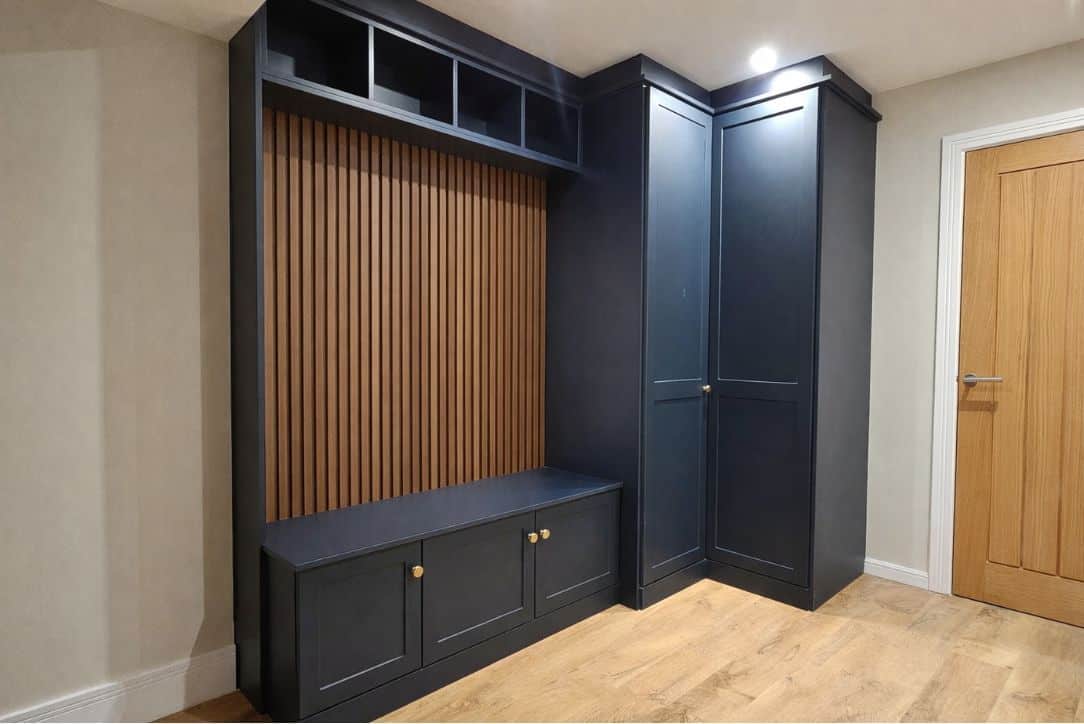
What colours work best for busy boot rooms?
Recently installed in Islington, this boot room pairs Shaker Classic cabinetry with integrated bench seating, open cubbies for hats, scarves or baskets and floor-to-ceiling cupboards where bulkier items can be hidden away. The deep navy-blue finish is particularly forgiving for busy family homes, helping disguise everyday marks and scuffs.
How can you make an entrance or hallway work harder?
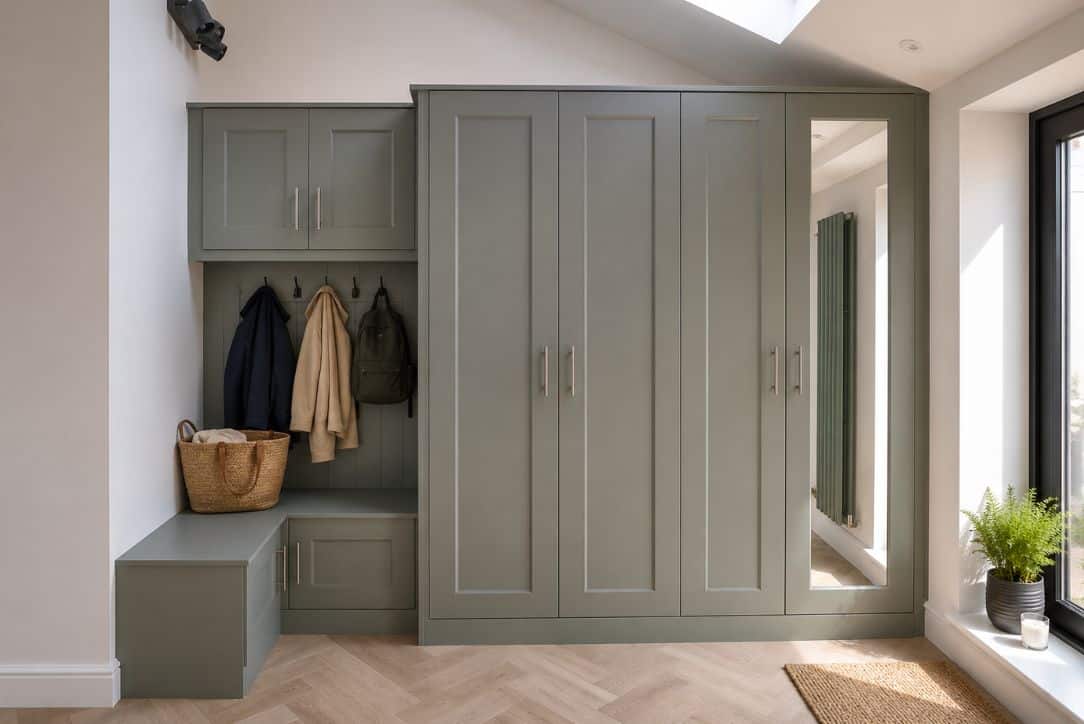
In this Wigan home, we turned an underused entrance space into a hardworking family storage solution. The full-length mirror is a super-useful finishing touch that’s ideal for those last-minute checks on the way out of the door.
How do you design a dog-friendly boot room?
This real-home installation in Staffordshire combines closed cabinetry from our Elle range with open storage, so everyday essentials are easy to grab on the way in or out. And there’s even space for the family dog’s bed. Pet-friendly storage is becoming an increasingly important part of boot room design, with homeowners asking for dedicated places for dog leads, towels, treats and grooming supplies – making it easier to get out for a walk and deal with muddy paws when you get home. It’s a great example of designing a boot room around everything – and everyone – that needs to use the space.
The boot room mistake Keeshak sees most often
One of the biggest mistakes we see is people designing their storage for how they live today, instead without thinking about what their family life might look like in the future.
“Children grow up and hobbies and interests change over the years,” says Keeshak. “So, the stuff you’re storing changes too. The most successful boot rooms are the ones designed with that flexibility in mind – with adjustable shelving, a mixture of hanging and concealed storage and proper use of the full height of the room. It’s these things that give longevity to the design and mean it’ll work well for years.”
Keeshak also answers some more frequently-asked questions about fitted boot rooms
Can you have a boot room in a small home?
“You really don’t need a large house – we’ve recently designed some incredibly successful designs in some surprisingly compact spaces, from utility rooms to garage entrances and narrow hallways to unused alcoves. Custom-made fitted furniture is brilliant for making the most of those awkward spaces where standard furniture just doesn’t fit quite right.”
Do you need a separate room for a boot room?
“No, you definitely don’t need a separate space to accommodate a boot room. We’ve designed and fitted boot rooms in hallways, the wasted space under the stairs and all manner of oddly-shaped nooks and corners. They’re all spaces that can be turned into practical storage space.”
What should every boot room include?
“If space allows, I’d recommend including a combination of hanging space, enclosed cupboards, shoe storage, seating and overhead cabinets for seasonal items that you don’t use all of the time.”
Is bespoke better than freestanding furniture?
“Our bespoke designs centre around your home, your lifestyle and your family’s individual routines. Freestanding furniture just doesn’t offer the same flexibility. Built-in storage means you can really make the most of the space available. It gives a seamless look and it’s built to last.”